Why the Rose Bowl Was Not Selected for Major FIFA World Cup 2026 Matches
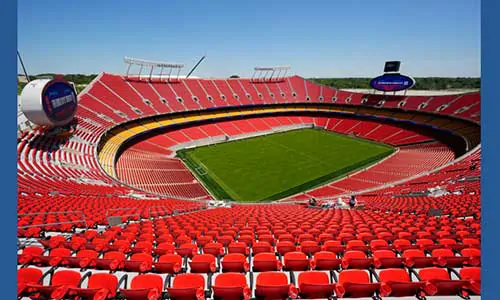
As excitement builds for the historic FIFA World Cup 2026, soccer fans around the globe are preparing for the largest and most ambitious tournament in the sport’s history. Spanning three host nations—the United States, Mexico, and Canada—the tournament will feature an expanded field of 48 teams competing across 16 world-class venues. In Southern California, a region long considered the heart of American soccer, matches will indeed take place. However, they will not be played at the stadium most closely associated with the sport’s legacy in the United States.
Pasadena’s legendary Rose Bowl, a National Historic Landmark with a seating capacity exceeding 90,000, was completely omitted from the final venue list. Instead, the newly built, multi-billion-dollar SoFi Stadium in Inglewood was chosen to represent Los Angeles. For many traditionalists, the decision to bypass the site of the legendary 1994 World Cup Final was shocking. However, a deeper look into the logistical, financial, and structural demands of the modern sports landscape reveals exactly why this iconic venue was left on the sidelines for the FIFA World Cup 2026.
Table of Contents
- The Historic Soccer Legacy of the Rose Bowl
- The Evolving Demands of the FIFA World Cup 2026
- Rose Bowl vs. SoFi Stadium: A Side-by-Side Comparison
- The Financial Realities of the “FIFA Model”
- Logistical and Transportation Bottlenecks in Pasadena
- Summer Climate and Spectator Comfort Concerns
- A Permanent Shift: The 2031 Women’s World Cup Connection
- Conclusion: The Future of Soccer at the Rose Bowl
- Frequently Asked Questions (FAQs)
The Historic Soccer Legacy of the Rose Bowl
To understand the weight of the Rose Bowl’s omission from the FIFA World Cup 2026, one must first appreciate its unmatched history in global soccer. Built in 1922, the stadium is best known to domestic audiences as the home of the Rose Bowl Game and UCLA Bruins football. Yet, on the international stage, the Rose Bowl has hosted some of the most defining moments in soccer history.
In 1994, the Rose Bowl was the crown jewel of the tournament, hosting eight matches, including the memorable final where Brazil defeated Italy on penalty kicks after Roberto Baggio’s famous miss. Five years later, in 1999, the stadium hosted the FIFA Women’s World Cup Final. That day, over 90,000 fans watched Brandi Chastain score the decisive penalty shootout goal to secure the trophy for the United States, cementing an iconic moment in women’s sports history.
Despite this unmatched resume, the evolution of global sports hosting has shifted the focus from historical sentiment to corporate utility. When the joint North American bid was formulated for the FIFA World Cup 2026, organizers initially proposed using both the Rose Bowl and SoFi Stadium. However, as the selection process progressed, the governing body made it clear that only one venue in the Los Angeles metropolitan area would make the final cut.
The Evolving Demands of the FIFA World Cup 2026
The scale of the modern sports entertainment industry is vastly different from what it was in 1994. Today, major tournaments are multi-billion-dollar corporate spectacles. To maximize profitability, the tournament organizers enforce strict, uncompromising guidelines regarding stadium design, spectator comfort, technology, and premium hospitality infrastructure.
Older “bowl-style” stadiums, regardless of their historical significance, struggle to satisfy these modern criteria. To secure host status for the FIFA World Cup 2026, candidate stadiums had to present a complete package of “turnkey” readiness, featuring:
- State-of-the-Art Media Facilities: High-speed fiber-optic connectivity, massive press boxes, and modern broadcast booths capable of transmitting high-definition signals to billions of viewers worldwide.
- Premium Corporate Suites: A high concentration of luxury boxes, VIP clubs, and high-end hospitality spaces where sponsors and corporate partners can be entertained.
- Concourse Width and Flow: Spanning pathways that allow tens of thousands of fans to move easily, reducing congestion and maximizing food, beverage, and merchandise sales.
- Flexible Playing Surfaces: The capability to easily lay down highly specialized, natural grass systems over advanced drainage and irrigation networks.
While the Rose Bowl is an architectural marvel of its era, it is essentially a massive, poured-concrete structure. Retrofitting a 100-year-old venue with modern wiring, expansive concourses, and the quantity of luxury boxes demanded by sponsors is an incredibly expensive and structurally invasive undertaking. This physical limitation put the Rose Bowl at a massive disadvantage when compared to its shiny, modern neighbor in Inglewood.
Rose Bowl vs. SoFi Stadium: A Side-by-Side Comparison
The contrast between the two primary Southern California venue candidates highlights why the newer facility won the right to host FIFA World Cup 2026 matches.
| Feature | Rose Bowl (Pasadena) | SoFi Stadium (Inglewood) |
|---|---|---|
| Year Opened | 1922 | 2020 |
| Estimated Construction Cost | $272,000 (approx. $4.8M adjusted) | $5+ Billion |
| Seating Capacity | 90,888 | 70,240 (expandable to 100,000) |
| Luxury Suites & VIP Boxes | Limited (Terry Donahue Pavilion) | Over 260 Luxury Suites |
| Roof Structure | Completely Open-Air | ETFE Canopy (Translucent Roof) |
| Modern Transit Integration | Poor (Requires shuttle buses) | Moderate (Closer to LAX and major transit hubs) |
As the table indicates, while the Rose Bowl holds a slight advantage in raw seating capacity, SoFi Stadium dominates in every metric that drives modern corporate revenue. SoFi’s translucent canopy roof protects fans from direct sunlight while maintaining an open-air feel. Furthermore, its 260+ luxury suites and state-of-the-art technological backbone make it a perfect fit for the commercially driven nature of the FIFA World Cup 2026.
The Financial Realities of the “FIFA Model”
Beyond the physical structures of the stadiums, the financial framework of hosting a modern world tournament played a major role in the Rose Bowl’s exclusion. In municipal politics, stadium operations must balance community impact, taxpayer liability, and return on investment.
In various public statements, Rose Bowl General Manager Jens Weiden highlighted the complex financial reality of working with global soccer’s governing body. The modern tournament operational model is highly demanding. It requires host cities, venue operators, and local taxpayers to fund massive, highly specific stadium improvements. These upgrades range from widening the physical field dimensions to installing temporary infrastructure for security and VIP hospitality.
However, under the standard agreements, the international governing body retains the vast majority of the direct revenues generated during the tournament. This includes ticket sales, global broadcast rights, and stadium sponsorships. For a privately owned stadium backed by a billionaire owner—such as SoFi Stadium and the Kroenke family—absorbing these high up-front costs is a calculated business risk designed to elevate the venue’s global brand.
For the City of Pasadena and the Rose Bowl Operating Company, which manage a municipal historic treasure, committing millions of taxpayer dollars to satisfy highly specific requirements without a guaranteed, direct revenue share was financially unviable. The risk of running a deficit was simply too high for a public entity, ultimately leading to a shift in priorities.
Logistical and Transportation Bottlenecks in Pasadena
Even if the financial terms had been favorable, the geographic location of the Rose Bowl presents significant operational challenges. Nestled deep within the residential Arroyo Seco canyon, the stadium is celebrated for its scenic beauty but notorious for its accessibility issues.
There are no direct rail or subway connections to the Rose Bowl. During major events, such as the annual Rose Bowl Game or high-profile concerts, fans must rely on a complex shuttle system operating from the Parsons Corporation parking lot in Old Pasadena, or navigate narrow, winding residential streets that quickly become gridlocked. Uber, Lyft, and taxi drop-offs are similarly constrained by the limited entry and exit points of the canyon.
For the FIFA World Cup 2026, where hundreds of thousands of international visitors—many of whom are unfamiliar with Los Angeles’ car-centric layout—will descend on the region, these transit bottlenecks present a major security and logistical risk. SoFi Stadium, located in Inglewood, is much closer to Los Angeles International Airport (LAX) and is better integrated into the city’s broader highway and public transit networks, making it a far more practical choice for international crowds.
Summer Climate and Spectator Comfort Concerns
Another critical, yet often overlooked, factor in stadium selection is the local climate during the tournament’s summer schedule. The games will be played during June and July, months when Southern California experiences intense heat.
Because the Rose Bowl is situated in the San Gabriel Valley, temperatures in Pasadena are consistently several degrees hotter than in coastal or central areas of Los Angeles. Furthermore, the Rose Bowl is a completely open-air concrete structure with no roof or canopy to provide shade for the vast majority of the stands. During heatwaves, temperatures inside the concrete bowl can climb to dangerous levels, posing health risks to spectators and players alike.
These concerns were validated during recent summer soccer events in the region, where fans reported challenging conditions due to intense heat and limited water access. In contrast, SoFi Stadium’s fixed, translucent roof and open sides allow ocean breezes to naturally cool the interior while completely shielding fans from the direct summer sun. This safety and comfort advantage is highly valued by tournament organizers planning a summer event.
A Permanent Shift: The 2031 Women’s World Cup Connection
The exclusion of the Rose Bowl from the FIFA World Cup 2026 is not an isolated incident; rather, it represents a permanent structural shift in how major soccer matches are allocated in the United States. This trend was further emphasized when the United States Soccer Federation submitted its joint bid with Mexico to host the 2031 FIFA Women’s World Cup.
Despite the Rose Bowl being the sacred ground of the historic 1999 Women’s World Cup victory, the official bid book omitted the Pasadena stadium entirely, once again proposing SoFi Stadium as the primary venue for Southern California. This omission confirms that soccer’s domestic governing bodies have accepted a new reality: the historic charm of older venues can no longer compete with the “turnkey” efficiency, corporate luxury, and climate-controlled environments of 21st-century architectural masterpieces.
Conclusion: The Future of Soccer at the Rose Bowl
Ultimately, the Rose Bowl was not selected for major FIFA World Cup 2026 matches due to a combination of structural, logistical, and financial realities. The venue’s historic charm and massive capacity simply could not overcome its lack of premium corporate suites, the immense taxpayer cost required for modern upgrades, the notorious transportation bottlenecks of the Arroyo Seco, and the lack of summer climate protection.
While the stadium will miss out on the tournament, its legacy as a cathedral of American soccer remains untouched. The Rose Bowl will continue to host high-profile club friendlies, international exhibitions, and community celebrations, proving that history still holds value, even if it no longer fits the corporate mold of the modern world stage. For fans looking to experience the tournament in Southern California, FIFA’s official Los Angeles Host City guide provides all the details on the upcoming matches in Inglewood.
Are you planning to attend a match in Southern California? Be sure to explore regional transit guides and secure your tickets early to witness history in the making. For more updates on match schedules and venue details across the United States, visit the official U.S. Soccer Federation website.
Frequently Asked Questions (FAQs)
Will any matches for the FIFA World Cup 2026 be played at the Rose Bowl?
No, the Rose Bowl was not selected as a host venue. All Los Angeles-area matches for the tournament will be played exclusively at SoFi Stadium in Inglewood.
Why was SoFi Stadium selected over the Rose Bowl?
SoFi Stadium is a modern, state-of-the-art facility featuring over 260 luxury suites, advanced media capabilities, a protective canopy roof, and superior public transit integration, making it highly attractive to commercial organizers.
Has the Rose Bowl hosted World Cup matches in the past?
Yes, the Rose Bowl has a rich soccer history. It hosted several matches in the 1994 Men’s World Cup (including the Final) and the 1999 Women’s World Cup (including the Final).
What are the primary transit issues facing the Rose Bowl?
The Rose Bowl is located in a residential canyon (Arroyo Seco) with no direct rail connections. Large events require complex shuttle bus systems, which often lead to severe traffic congestion on narrow local streets.
Does the Rose Bowl still host major soccer matches today?
Yes, despite missing out on the tournament, the Rose Bowl regularly hosts major international club friendlies, MLS rivalry matches (such as El Tráfico), and other high-profile exhibition games.