UEFA Champions League Winners List: Every Champion Since 1956
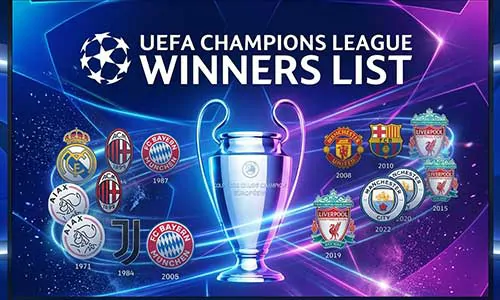
The UEFA Champions League represents the absolute pinnacle of club football. Every year, Europe’s finest clubs battle for the iconic “Big Ears” trophy, crafting historic narratives that stay with fans for generations. As the global football community eagerly anticipates the monumental FIFA World Cup 2026, the elite club stage remains the ultimate indicator of world-class talent and tactical innovation. In this ultimate guide, we walk you through the complete UEFA Champions League winners list from its inception in 1956 to the historic back-to-back triumphs of modern football. Along the way, we explore how the lessons, squads, and stars forged in these European nights are shaping the players who will dictate the narrative at the highly anticipated FIFA World Cup 2026.
Historically known as the European Cup, the tournament rebranded in 1992, introducing a group stage and expanding the field. This evolution transformed the competition into a multi-billion dollar spectacle. Today, winning this trophy is the dream of every professional player. Furthermore, the tactical intensity and elite physical demands of the Champions League serve as a crucial launchpad. Ultimately, many of the world-class players starring in Europe are currently refining their skillsets for international glory at the upcoming FIFA World Cup 2026.
Table of Contents
How Champions League Legacies Shape the FIFA World Cup 2026
The synergy between elite club football and international tournaments has never been stronger. As we approach the historic expansion of the FIFA World Cup 2026, which will feature 48 teams across North America, the Champions League acts as the primary proving ground. Club football allows players to build chemistry, master complex tactical setups, and handle extreme pressure under the brightest spotlights.
Consequently, international managers keep a close eye on Tuesday and Wednesday night fixtures. The tactical blueprints of club managers like Pep Guardiola, Luis Enrique, and Carlo Ancelotti are directly influencing the playing styles of national teams. Therefore, analyzing the tactical trends of the European club champions provides a reliable window into what football fans can expect during the FIFA World Cup 2026.
Elite Player Pipelines Leading to the FIFA World Cup 2026
Modern players face an intense, non-stop football calendar. Competing at the highest levels of the UEFA Champions League demands incredible physical conditioning and mental resilience. For national teams preparing for the grueling schedule of the FIFA World Cup 2026, having a roster packed with Champions League winners is a massive competitive advantage.
For example, players who have lifted the European trophy understand how to navigate high-stakes knockout stages. This invaluable experience directly translates to the high-pressure environment of a World Cup. In addition, the sports science and recovery methodologies developed by elite European clubs will play a vital role in ensuring these stars arrive at the FIFA World Cup 2026 in peak physical condition.
Tactical Innovations: From European Nights to the FIFA World Cup 2026 Stage
Tactical innovations in football historically originate in the UEFA Champions League before taking over the international stage. Systems like high-pressing, inverted full-backs, and possession-oriented transition play were perfected on European nights. Consequently, these elements will define the tactical battlegrounds of the FIFA World Cup 2026.
National team coaches rarely have the luxury of extended training camps. As a result, they often copy successful club tactics. By utilizing structures that their key players already understand from their Champions League campaigns, national teams can maximize their cohesion. Consequently, the tactical trends of the current Champions League campaign will heavily influence the aesthetic of the FIFA World Cup 2026.
Chronological History: Eras of European Dominance
To fully appreciate the prestige of the Champions League, we must look back at the distinct eras that have shaped this legendary competition. From the early dominance of Spanish football to the rise of modern dynasties, each era has contributed to the rich tapestry of the sport.
The Era of Real Madrid’s Absolute Dominance (1956–1960)
The tournament began as the European Champion Clubs’ Cup in the 1955/56 season. Real Madrid, led by the legendary Alfredo Di Stéfano, Ferenc Puskás, and Francisco Gento, immediately asserted their dominance. The Spanish giants won the first five editions of the tournament, setting a record that remains untouched. Their 7-3 victory over Eintracht Frankfurt in the 1960 final is still considered one of the greatest football matches ever played.
The Portuguese, Italian, and British Breakthroughs (1961–1969)
The 1960s brought a welcome diversification of European power. Benfica, inspired by the magnificent Eusébio, broke Real Madrid’s monopoly by winning back-to-back titles in 1961 and 1962. Subsequently, Italian football took center stage. AC Milan and Helenio Herrera’s Inter Milan introduced the defensive masterclass of “Catenaccio,” winning three titles combined.
Meanwhile, British clubs made their historic breakthrough. Celtic’s legendary “Lisbon Lions” became the first British team to hoist the trophy in 1967. Just a year later, Matt Busby led Manchester United to an emotional victory at Wembley, a decade after the tragic Munich air disaster. This era laid the groundwork for the global expansion of the sport, inspiring future generations who would dream of international glory at events like the FIFA World Cup 2026.
The Philosophies of Total Football and German Efficiency (1970–1976)
The early 1970s belonged to the Netherlands. Ajax Amsterdam, powered by Johan Cruyff and the revolutionary philosophy of “Total Football,” captured three consecutive titles from 1971 to 1973. Their style of play was fluid, beautiful, and incredibly influential, changing how the sport was coached worldwide.
Following Ajax’s decline, West Germany’s Bayern Munich established their own dynasty. Led by the prolific Franz Beckenbauer, Gerd Müller, and Sepp Maier, Bayern mirrored Ajax by securing three straight European Cups of their own from 1974 to 1976. This period of tactical evolution remains a prime example of how distinct footballing philosophies can dominate the globe.
The English Dominance and Red Renaissance (1977–1884)
Between 1977 and 1984, English clubs asserted an iron grip on the European Cup, winning seven out of eight titles. Bob Paisley’s Liverpool was the driving force, winning four trophies and establishing themselves as a global powerhouse. Meanwhile, Nottingham Forest completed one of the greatest fairytale stories in sports history under Brian Clough, winning back-to-back titles in 1979 and 1980.
Aston Villa added to the English glory in 1982 by defeating Bayern Munich. This golden generation of English players set a standard of physicality and quick transition play. Many of these traits continue to influence modern squads as they prepare for the high-intensity atmosphere of the FIFA World Cup 2026.
The Rebrand and the Rise of Modern Dynasties (1992–2024)
In 1992, UEFA rebranded the competition as the Champions League. The tournament was no longer exclusive to league champions, allowing multiple top-tier teams from the strongest leagues to compete. This structural shift elevated the quality and financial power of the competition to unprecedented heights.
The subsequent decades saw the rise of modern superclubs. Pep Guardiola’s tiki-taka Barcelona, Carlo Ancelotti’s resilient Real Madrid, and Jupp Heynckes’ treble-winning Bayern Munich defined this era. Real Madrid went on an historic run, winning five titles in nine years between 2014 and 2022, culminating in their 15th title in 2024. These legendary clubs became the ultimate benchmarks of footballing excellence.
The French Ascendancy: Paris Saint-Germain’s Back-to-Back Crowns (2025–2026)
The landscape of European football shifted dramatically in 2025. Under the tactical guidance of Luis Enrique, Paris Saint-Germain finally claimed their first-ever UEFA Champions League title with a spectacular 5-0 victory over Inter Milan in Munich. This victory broke the traditional hegemony of Spanish and English clubs, highlighting a new era of French tactical excellence.
To prove their triumph was no fluke, PSG successfully defended their crown in 2026. In a dramatic final at the Puskás Aréna in Budapest, they defeated a highly competitive Arsenal side 4-3 on penalties following a tense 1-1 draw. This monumental achievement made PSG only the second club in the modern Champions League era to retain the title, solidifying their status as a true modern football dynasty. Many of their key stars are now heavily favored to lead their respective national teams to glory at the FIFA World Cup 2026.
Complete UEFA Champions League Winners List (1956–2026)
Below is the complete, year-by-year list of every single European champion since the tournament’s inception in 1956. This rich history highlights the changing power dynamics of European club football, showing how different nations and philosophies have taken turns dominating the continent. For more official historic stats, you can visit the Official UEFA Website.
| Season | Winner | Runner-up | Score |
|---|---|---|---|
| 2025/26 | Paris Saint-Germain (FRA) | Arsenal (ENG) | 1–1 (4–3 pens) |
| 2024/25 | Paris Saint-Germain (FRA) | Inter Milan (ITA) | 5–0 |
| 2023/24 | Real Madrid (ESP) | Borussia Dortmund (GER) | 2–0 |
| 2022/23 | Manchester City (ENG) | Inter Milan (ITA) | 1–0 |
| 2021/22 | Real Madrid (ESP) | Liverpool (ENG) | 1–0 |
| 2020/21 | Chelsea (ENG) | Manchester City (ENG) | 1–0 |
| 2019/20 | Bayern Munich (GER) | Paris Saint-Germain (FRA) | 1–0 |
| 2018/19 | Liverpool (ENG) | Tottenham Hotspur (ENG) | 2–0 |
| 2017/18 | Real Madrid (ESP) | Liverpool (ENG) | 3–1 |
| 2016/17 | Real Madrid (ESP) | Juventus (ITA) | 4–1 |
| 2015/16 | Real Madrid (ESP) | Atlético Madrid (ESP) | 1–1 (5–3 pens) |
| 2014/15 | Barcelona (ESP) | Juventus (ITA) | 3–1 |
| 2013/14 | Real Madrid (ESP) | Atlético Madrid (ESP) | 4–1 (a.e.t.) |
| 2012/13 | Bayern Munich (GER) | Borussia Dortmund (GER) | 2–1 |
| 2011/12 | Chelsea (ENG) | Bayern Munich (GER) | 1–1 (4–3 pens) |
| 2010/11 | Barcelona (ESP) | Manchester United (ENG) | 3–1 |
| 2009/10 | Inter Milan (ITA) | Bayern Munich (GER) | 2–0 |
| 2008/09 | Barcelona (ESP) | Manchester United (ENG) | 2–0 |
| 2007/08 | Manchester United (ENG) | Chelsea (ENG) | 1–1 (6–5 pens) |
| 2006/07 | Milan (ITA) | Liverpool (ENG) | 2–1 |
| 2005/06 | Barcelona (ESP) | Arsenal (ENG) | 2–1 |
| 2004/05 | Liverpool (ENG) | Milan (ITA) | 3–3 (3–2 pens) |
| 2003/04 | Porto (POR) | Monaco (FRA) | 3–0 |
| 2002/03 | Milan (ITA) | Juventus (ITA) | 0–0 (3–2 pens) |
| 2001/02 | Real Madrid (ESP) | Bayer Leverkusen (GER) | 2–1 |
| 2000/01 | Bayern Munich (GER) | Valencia (ESP) | 1–1 (5–4 pens) |
| 1999/00 | Real Madrid (ESP) | Valencia (ESP) | 3–0 |
| 1998/99 | Manchester United (ENG) | Bayern Munich (GER) | 2–1 |
| 1997/98 | Real Madrid (ESP) | Juventus (ITA) | 1–0 |
| 1996/97 | Borussia Dortmund (GER) | Juventus (ITA) | 3–1 |
| 1995/96 | Juventus (ITA) | Ajax (NED) | 1–1 (4–2 pens) |
| 1994/95 | Ajax (NED) | Milan (ITA) | 1–0 |
| 1993/94 | Milan (ITA) | Barcelona (ESP) | 4–0 |
| 1992/93 | Marseille (FRA) | Milan (ITA) | 1–0 |
| 1991/92 | Barcelona (ESP) | Sampdoria (ITA) | 1–0 (a.e.t.) |
| 1990/91 | Red Star Belgrade (YUG) | Marseille (FRA) | 0–0 (5–3 pens) |
| 1989/90 | Milan (ITA) | Benfica (POR) | 1–0 |
| 1988/89 | Milan (ITA) | Steaua București (ROU) | 4–0 |
| 1987/88 | PSV Eindhoven (NED) | Benfica (POR) | 0–0 (6–5 pens) |
| 1986/87 | Porto (POR) | Bayern Munich (FRG) | 2–1 |
| 1985/86 | Steaua București (ROU) | Barcelona (ESP) | 0–0 (2–0 pens) |
| 1984/85 | Juventus (ITA) | Liverpool (ENG) | 1–0 |
| 1983/84 | Liverpool (ENG) | Roma (ITA) | 1–1 (4–2 pens) |
| 1982/83 | Hamburger SV (FRG) | Juventus (ITA) | 1–0 |
| 1981/82 | Aston Villa (ENG) | Bayern Munich (FRG) | 1–0 |
| 1980/81 | Liverpool (ENG) | Real Madrid (ESP) | 1–0 |
| 1979/80 | Nottingham Forest (ENG) | Hamburger SV (FRG) | 1–0 |
| 1978/79 | Nottingham Forest (ENG) | Malmö FF (SWE) | 1–0 |
| 1977/78 | Liverpool (ENG) | Club Brugge (BEL) | 1–0 |
| 1976/77 | Liverpool (ENG) | Borussia M’gladbach (FRG) | 3–1 |
| 1975/76 | Bayern Munich (FRG) | Saint-Étienne (FRA) | 1–0 |
| 1974/75 | Bayern Munich (FRG) | Leeds United (ENG) | 2–0 |
| 1973/74 | Bayern Munich (FRG) | Atlético Madrid (ESP) | 4–0 (replay after 1–1) |
| 1972/73 | Ajax (NED) | Juventus (ITA) | 1–0 |
| 1971/72 | Ajax (NED) | Inter Milan (ITA) | 2–0 |
| 1970/71 | Ajax (NED) | Panathinaikos (GRE) | 2–0 |
| 1969/70 | Feyenoord (NED) | Celtic (SCO) | 2–1 (a.e.t.) |
| 1968/69 | Milan (ITA) | Ajax (NED) | 4–1 |
| 1967/68 | Manchester United (ENG) | Benfica (POR) | 4–1 (a.e.t.) |
| 1966/67 | Celtic (SCO) | Inter Milan (ITA) | 2–1 |
| 1965/66 | Real Madrid (ESP) | Partizan (YUG) | 2–1 |
| 1964/65 | Inter Milan (ITA) | Benfica (POR) | 1–0 |
| 1963/64 | Inter Milan (ITA) | Real Madrid (ESP) | 3–1 |
| 1962/63 | Milan (ITA) | Benfica (POR) | 2–1 |
| 1961/62 | Benfica (POR) | Real Madrid (ESP) | 5–3 |
| 1960/61 | Benfica (POR) | Barcelona (ESP) | 3–2 |
| 1959/60 | Real Madrid (ESP) | Eintracht Frankfurt (FRG) | 7–3 |
| 1958/59 | Real Madrid (ESP) | Reims (FRA) | 2–0 |
| 1957/58 | Real Madrid (ESP) | Milan (ITA) | 3–2 (a.e.t.) |
| 1956/57 | Real Madrid (ESP) | Fiorentina (ITA) | 2–0 |
| 1955/56 | Real Madrid (ESP) | Reims (FRA) | 4–3 |
This comprehensive list showcases the immense historical background of club football’s greatest tournament. Many historical giants who dominated the sport decades ago helped build the global infrastructure that now makes the expanded FIFA World Cup 2026 possible.
Most Successful Clubs in Champions League History
While winning the tournament once is a monumental achievement, a select group of clubs have dominated the competition across multiple decades. Real Madrid stands far ahead of the competition, but other giants like AC Milan, Liverpool, and Bayern Munich boast remarkable track records.
Furthermore, new powerhouses are quickly climbing the historical ranks. Paris Saint-Germain’s back-to-back victories have rewritten modern football dynamics. The table below outlines the elite clubs with multiple European titles, whose squads will act as massive player hubs for the FIFA World Cup 2026.
| Club | Titles | Winning Years |
|---|---|---|
| Real Madrid | 15 | 1956, 1957, 1958, 1959, 1960, 1966, 1998, 2000, 2002, 2014, 2016, 2017, 2018, 2022, 2024 |
| AC Milan | 7 | 1963, 1969, 1989, 1990, 2003, 2007 |
| Bayern Munich | 6 | 1974, 1975, 1976, 2001, 2013, 2020 |
| Liverpool | 6 | 1977, 1978, 1981, 1984, 2005, 2019 |
| Barcelona | 5 | 1992, 2006, 2009, 2011, 2015 |
| Ajax | 4 | 1971, 1972, 1973, 1995 |
| Manchester United | 3 | 1968, 1999, 2008 |
| Inter Milan | 3 | 1964, 1965, 2010 |
| Juventus | 2 | 1985, 1996 |
| Benfica | 2 | 1961, 1962 |
| Chelsea | 2 | 2012, 2021 |
| Nottingham Forest | 2 | 1979, 1980 |
| Porto | 2 | 1987, 2004 |
| Paris Saint-Germain | 2 | 2025, 2026 |
Ultimately, these powerhouse clubs act as the primary engine rooms of international football. Consequently, their players have built a chemistry that will be clearly visible once their respective countries take the field at the highly anticipated FIFA World Cup 2026.
Frequently Asked Questions (FAQ)
Q1: Which club has won the most UEFA Champions League titles?
Real Madrid holds the absolute record with 15 Champions League titles. Their historical dominance spans both the early European Cup era and the modern Champions League format.
Q2: Who is the reigning champion of the UEFA Champions League?
Paris Saint-Germain (PSG) is the reigning champion, having successfully defended their crown by defeating Arsenal 4-3 on penalties (1-1 after extra time) at the Puskás Aréna in Budapest in the 2026 final.
Q3: How many clubs have won back-to-back Champions League titles in the modern era?
Only two clubs have achieved this monumental feat in the Champions League era (post-1992): Real Madrid (who won three in a row between 2016 and 2018) and Paris Saint-Germain (who won in 2025 and 2026).
Q4: How does the Champions League final affect player fitness for the FIFA World Cup 2026?
Because the Champions League final takes place at the end of May, players reaching the final have a highly intensive physical load. However, the elite recovery systems used by club squads ensure they transition safely to international duty for the FIFA World Cup 2026.
Q5: Has a French club ever won the Champions League before PSG?
Yes, Marseille was the first French club to win the Champions League in 1993. Following a long drought, PSG became the second French club to lift the trophy in 2025 and defended it successfully in 2026.
Q6: Where can I find more updates about the preparations and qualifications for the FIFA World Cup 2026?
For the latest qualification updates, stadiums, and schedule announcements, you can consult the official Official FIFA Website.
Conclusion
The journey through the UEFA Champions League winners list from 1956 to 2026 highlights the evolution of the sport. From Real Madrid’s early five-year dynasty to PSG’s modern back-to-back triumph, the competition continues to serve as the ultimate platform for footballing excellence. As players transition from these hard-fought club battles, the excitement continues to build for the upcoming FIFA World Cup 2026, where these newly crowned champions will seek to replicate their success on the grandest international stage.
Which historical champion do you think had the most dominant run? Do you believe a star player from the reigning European champions will carry this momentum into the FIFA World Cup 2026 and hoist the iconic trophy? Share your thoughts in the comments below, and don’t forget to bookmark this page for more football insights and historical analysis!