Offside Rule Explained: A Beginner’s Guide to Football’s Most Confusing Law
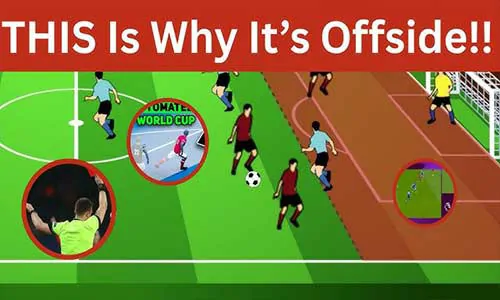
Offside Rule Explained: A Beginner’s Guide Ahead of the FIFA World Cup 2026
Football is a sport loved by billions, bringing together diverse cultures and nations. As global excitement builds for the upcoming FIFA World Cup 2026, millions of new and returning fans are tuning in to follow their favorite teams. However, for beginners, one aspect of the beautiful game remains notoriously difficult to grasp: the offside rule. This single rule often decides major tournament matches, sparks heated debates among pundits, and leaves casual viewers scratching their heads in confusion.
Understanding this rule is essential if you want to fully appreciate the tactical battles that will unfold during the FIFA World Cup 2026. Whether you are a newcomer trying to follow your first tournament or a casual viewer looking to brush up on the laws of the game, this comprehensive guide will break down Law 11 of the International Football Association Board (IFAB) rulebook into simple, easy-to-digest concepts.
Table of Contents
- What is the Offside Rule in Football?
- The Three Criteria of an Offside Position
- Active Play vs. Passive Offside: When is it Penalized?
- Exceptions to the Offside Rule
- The History and Evolution of Law 11
- Technology and Offside at the FIFA World Cup 2026
- Common Misconceptions About Offside
- Frequently Asked Questions (FAQ)
- Conclusion
What is the Offside Rule in Football?
At its core, the offside rule exists to prevent “cherry-picking” or “goal-hanging.” Without this law, attacking players could simply stand next to the opponent’s goal and wait for a long pass from their teammates, bypassing the entire midfield. This would make football far less tactical, reducing the physical and strategic battles that make tournaments like the FIFA World Cup 2026 so captivating.
The rule is governed by Law 11 of the Laws of the Game. It states that a player is in an offside position if they are nearer to the opponents’ goal line than both the ball and the second-last opponent when the ball is played to them. However, simply being in this position is not an offense on its own. The referee only blows the whistle if the player becomes actively involved in the play. We will examine this distinction in detail below.
The Three Criteria of an Offside Position
To determine if a player is in an offside position, officials look at three specific criteria at the exact moment the ball is passed by a teammate. If you keep these three conditions in mind while watching the FIFA World Cup 2026, you will be able to spot offside calls like a professional referee.
1. The Player Must Be in the Opponent’s Half
A player cannot be in an offside position if they are in their own half of the field. The halfway line acts as a safe zone. Even if an attacker is standing completely alone behind the entire opposing defense, they are onside as long as they remain in their own half at the exact moment the pass is kicked. This is a crucial detail to remember during high-stakes counters at the FIFA World Cup 2026.
2. The Player Must Be Nearer to the Goal Line than the Ball
If an attacking player is behind or perfectly level with the ball when it is passed, they cannot be offside. This is why you often see two attackers running toward an empty goal, where one passes the ball sideways or backward to the other. As long as the receiving player was behind the ball when the pass was made, the play is entirely legal.
3. The Player Must Have Fewer than Two Opponents Between Them and the Goal Line
This is the part of the rule that confuses most beginners. The rule states that there must be at least two defending players between the attacker and the goal line. In almost all standard game situations, one of these two opponents is the goalkeeper, and the other is the last defender. However, if the goalkeeper runs out of the box, the rule still applies: the attacker must have two outfield defenders between them and the goal to remain onside.
Any part of the player’s head, torso, or legs that can legally score a goal is considered when measuring these lines. Hands and arms, however, are not counted because players cannot legally use them to score. The margins are often incredibly tight, which is why line technology will be a major talking point at the FIFA World Cup 2026.
Active Play vs. Passive Offside: When is it Penalized?
As mentioned earlier, standing in an offside position is not an offense in itself. A player can stand in an offside position all day without a whistle blowing, provided they do not get involved in the play. The assistant referee will only raise their flag if the player in that position becomes “actively involved.” According to the IFAB, active involvement occurs in one of three ways:
Interfering with Play
This is the most straightforward scenario. It occurs when a player in an offside position physically touches, plays, or receives the ball passed by a teammate. If the ball makes contact with them, the whistle blows immediately, and the defending team is awarded an indirect free kick.
Interfering with an Opponent
A player can be penalized even if they do not touch the ball. If their physical presence or actions prevent a defender or the goalkeeper from playing the ball, they are interfering. Examples include blocking the goalkeeper’s line of sight, physically challenging a defender for the ball, or making a run that clearly distracts or obstructs an opponent. At the elite level of the FIFA World Cup 2026, defensive units rely on these subtle interference rules to protect their goals.
Gaining an Advantage
If a teammate takes a shot that hits the goalpost, crossbar, or is saved by the goalkeeper, and the ball bounces to an attacking player who was in an offside position when the original shot was taken, that player is penalized. They have gained an unfair advantage from their illegal position.
| Scenario | Offside Status | Reason |
|---|---|---|
| Attacker receives a pass in their own half. | ONSIDE | No offside can occur in one’s own half. |
| Attacker is level with the last defender when passed to. | ONSIDE | Being level with the second-last opponent is legal. |
| Attacker stands offside but does not touch the ball or block any opponent. | ONSIDE (Passive) | No active involvement in the play. |
| Attacker in offside position scores from a ball that deflected off a post. | OFFSIDE | Gaining an advantage from an offside position. |
Exceptions to the Offside Rule
To make the game more dynamic, the creators of modern football rules included three major exceptions where a player cannot be penalized for offside, regardless of where they are standing on the pitch. These exceptions often lead to creative set-piece routines, which we are bound to observe during the FIFA World Cup 2026 matches.
- The Throw-In: A player cannot be offside directly from a throw-in. Teams often use this exception to throw the ball deep down the wing to an attacker standing behind the defense.
- The Corner Kick: Because a corner kick is taken from the corner of the pitch (which is level with the goal line), any teammate receiving the ball is technically behind or level with the ball, making offside impossible.
- The Goal Kick: A player receiving the ball directly from a legal goal kick cannot be penalized for offside. This allows teams with powerful kickers to bypass defensive lines entirely.
Knowing these exceptions will help you understand why defenders sometimes leave an attacker unmarked during a throw-in or goal kick, a tactic you will certainly witness during the competitive matches of the FIFA World Cup 2026.
The History and Evolution of Law 11
The offside rule was not always as lenient as it is today. In the mid-19th century, early versions of the rule required as many as three or four defensive opponents to be between the attacker and the goal. Over the decades, tactical innovations forced football’s governing bodies to modify the rule to encourage more attacking play and higher-scoring matches.
In 1925, the rule was changed from requiring three defenders to just two. This single adjustment drastically increased the average number of goals per game. Decades later, in 1990, the rule was amended again to state that an attacker who is perfectly level with the second-last defender is considered onside. Today, as we prepare for the FIFA World Cup 2026, the rules continue to adapt to the speed of modern athletes and the integration of highly precise technologies.
Technology and Offside at the FIFA World Cup 2026
One of the biggest talking points in modern football is the role of technology. Gone are the days when offside decisions relied solely on the quick eyes of human assistant referees. In today’s game, the Video Assistant Referee (VAR) plays a massive role in reviewing critical match events, ensuring that the final outcome of games during the FIFA World Cup 2026 is determined as fairly as possible.
At the upcoming FIFA World Cup 2026, fans can expect the use of Semi-Automated Offside Technology (SAOT). This system utilizes specialized tracking cameras mounted under the stadium roof to track up to 29 data points on each individual player’s body, 50 times per second. By combining this tracking data with a sensor inside the match ball, the technology can determine the exact microsecond the ball was kicked and whether any part of the attacker’s body was in an offside position.
This automation significantly reduces the time it takes to make offside decisions, allowing VAR officials to double-check line calls within seconds. While some purists argue that technology takes away some of the organic drama of football, it guarantees a level of accuracy that will protect the integrity of the teams competing in the FIFA World Cup 2026.
Common Misconceptions About Offside
Even seasoned football followers sometimes misunderstand the intricacies of Law 11. Let’s clarify some of the most common myths before you sit down to watch the global action of the FIFA World Cup 2026.
Myth 1: “The goalkeeper is always the first defender.”
While the goalkeeper is almost always the player closest to the goal line, they are simply treated as one of the two required opponents. If the goalkeeper runs forward during a corner kick or a counter-attack, the “second-last opponent” rule still stands, meaning two outfield defenders must be between the attacker and the goal line.
Myth 2: “If the ball is deflected by a defender, the attacker is onside.”
A deflection is not a deliberate play. If a defender tries to block a pass and the ball merely richochets off them to an offside attacker, the attacker is still penalized. However, if the defender deliberately plays the ball (such as attempting a deliberate pass back to their keeper or clearing it) and miscalculates, the attacker is deemed onside because the defender was in complete control of their actions.
Myth 3: “A player can be offside from a pass that goes backward.”
The direction of the pass does not matter; it is the position of the player relative to the ball and the second-last defender at the exact moment the ball is kicked that determines offside. If an attacker runs forward to meet a backward pass while they were already standing in front of the ball and the defenders when it was kicked, they can still be penalized.
Frequently Asked Questions (FAQ)
Can a player be offside if they don’t touch the ball?
Yes. If a player in an offside position interferes with an opponent by blocking their vision, obstructing their run, or physically challenging them for the ball, they will be called offside.
Does the offside rule apply during penalty kicks?
No, the offside rule does not apply during the execution of a penalty kick. However, teammates of the penalty taker must remain outside the penalty box and behind the penalty spot until the ball is kicked.
How will the FIFA World Cup 2026 ensure accurate offside decisions?
The tournament will utilize advanced Semi-Automated Offside Technology (SAOT) alongside traditional VAR teams to track player movements with extreme precision, delivering rapid and accurate offside calls.
What is the penalty for being caught offside?
If a player is penalized for offside, the referee awards an indirect free kick to the opposing team. This kick is taken from the exact spot where the offside player was positioned when the ball was played to them.
Can you be offside from a goal kick?
No. Under the official IFAB Laws of the Game, there is no offside offense if a player receives the ball directly from a legal goal kick.
Conclusion
The offside rule may seem complicated at first, but once you break down its three core criteria—the half, the ball, and the defenders—it becomes much easier to follow. Understanding this law will completely transform how you watch football, allowing you to appreciate the split-second decisions made by elite attackers and defensive lines as they battle for glory.
With the FIFA World Cup 2026 fast approaching, there is no better time to master the rules of the sport. Keep an eye on how different national teams utilize the offside trap to defend, and how strikers use timed runs to break through. For more official updates on the rules of the game, check out the IFAB Laws of the Game and follow tournament news on the Official FIFA Website.
Are there other soccer rules that confuse you? Leave a comment below, and let’s get ready to enjoy the spectacle of the FIFA World Cup 2026 together!