Gegenpressing Explained: The High-Pressure Football Strategy
Gegenpressing Explained: The High-Pressure Football Strategy for the FIFA World Cup 2026
Football tactics are constantly evolving, but few strategies have captured the imagination of modern tactical analysts quite like Gegenpressing. As national teams prepare their tactical blueprints for the highly anticipated FIFA World Cup 2026, understanding this high-octane philosophy is more critical than ever. Often translated from German as “counter-pressing,” Gegenpressing is not merely a defensive system; it is a proactive defensive-offensive hybrid designed to win the ball back immediately after losing possession. This tactical guide breaks down the mechanics, history, and future of this influential strategy, particularly focusing on how this high-pressure style will shape the upcoming FIFA World Cup 2026.
In modern football, transition phases often dictate the outcomes of high-stakes matches. Therefore, implementing a structured counter-press allows teams to exploit the momentary chaos that occurs when possession changes hands. Consequently, as we head towards the FIFA World Cup 2026, many international managers are adapting these club-level tactics to the international stage. Let us dive deep into the philosophy of Gegenpressing and analyze why it remains a dominant force in modern football.
Table of Contents
- What is Gegenpressing? The Core Philosophy
- The Origins and Evolution of Counter-Pressing
- The Key Mechanics of Gegenpressing
- The 4 Main Types of Gegenpressing
- Why Teams Will Rely on Gegenpressing at the FIFA World Cup 2026
- Tactical Advantages of the High-Pressure System
- The Physical and Tactical Demands of Counter-Pressing
- Notable Managers Famous for Gegenpressing
- How to Counter Gegenpressing: Key Weaknesses
- Gegenpressing in Modern International Football
- Frequently Asked Questions (FAQ)
What is Gegenpressing? The Core Philosophy
At its core, Gegenpressing is the tactical instruction to press the opponent immediately after losing possession, rather than retreating into a defensive block. The fundamental premise is simple: the opponent is at their most vulnerable the moment they win the ball. During these brief seconds, their players are transitioning from defensive positions to attacking shapes, leaving gaps in their structure. To understand how teams at the FIFA World Cup 2026 will play, one must understand this transitional vulnerability.
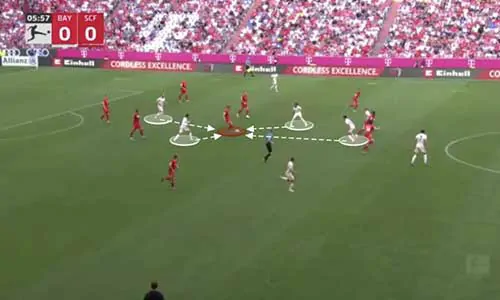
Instead of dropping back to protect the goal, a counter-pressing team floods the area around the ball. By doing so, they choke the opponent’s passing lanes and apply intense physical pressure to the player who has just won the ball. In addition, this strategy reduces the distance a team needs to travel to score once they regain possession. It essentially uses the opponent’s transition phase as a primary playmaker.
The Origins and Evolution of Counter-Pressing
While Jurgen Klopp popularized the term “Gegenpressing” during his successful tenures at Borussia Dortmund and Liverpool, the roots of the tactic run deep. The conceptual framework can be traced back to the “Total Football” played by Rinus Michels’ Netherlands team and Ajax in the 1970s. Furthermore, the legendary Soviet coach Valeriy Lobanovskyi utilized computerized data at Dynamo Kyiv to orchestrate synchronized pressing systems that laid the groundwork for modern tactical synchronization.
In the late 1980s, Arrigo Sacchi’s AC Milan perfected a compact defensive block that pressed high up the pitch, emphasizing tight distances between lines. Later, German coach Ralf Rangnick, often dubbed the “Godfather of Gegenpressing,” synthesized these ideas into a structured, highly systematic approach. Rangnick’s work influenced a whole generation of German coaches, setting up a tactical revolution that will culminate in the diverse tactical styles on display at the FIFA World Cup 2026.
The Key Mechanics of Gegenpressing
The execution of an effective counter-press relies on a concept known as the “five-second rule.” When possession is lost, the nearest players must swarm the ball carrier within five seconds. If the ball is not recovered within this window, the team must quickly drop back into a compact mid-block to prevent being bypassed. Therefore, structural discipline is just as important as physical intensity.
For the press to work, the entire team must shift in unison. If the forward line presses while the midfield hesitates, huge pockets of space open up for the opposition to exploit. Consequently, communication, anticipation, and tactical positioning are vital. As conditioning coaches prepare their squads ahead of the FIFA World Cup 2026, physical preparation is being tailored to meet these exact, high-intensity transition demands.
The 4 Main Types of Gegenpressing
Not all counter-pressing systems are identical. Depending on the manager’s philosophy and the players’ profiles, teams employ different variations. The table below outlines the four primary types of Gegenpressing that we are likely to witness at the FIFA World Cup 2026:
| Type of Press | Primary Focus | Tactical Goal | Famous Proponent |
|---|---|---|---|
| Man-Oriented | Pressing specific opponents closest to the ball | Force an immediate physical duel or passing error | Jupp Heynckes |
| Space-Oriented | Closing off the immediate space around the ball | Suffocate passing angles and trap the opponent | Roger Schmidt |
| Ball-Oriented | Swarming the ball-carrier directly with multiple players | Overwhelm the ball carrier through pure numbers | Pep Guardiola |
| Passing Lane-Oriented | Using cover shadows to block passing options | Force a long, low-percentage clearance | Jurgen Klopp |
Understanding these distinctions helps fans analyze how different national teams will set up their tactical structures. Whether a team uses a strict man-oriented press or a calculated passing-lane system, the ultimate objective remains identical: fast, aggressive defensive actions to regain control of the game.
Why Teams Will Rely on Gegenpressing at the FIFA World Cup 2026
The physical demands of international football have reached unprecedented levels. As a result, why teams will rely on Gegenpressing at the FIFA World Cup 2026 comes down to tactical efficiency. In a tournament format, games are often decided by thin margins. By winning the ball back high up the pitch, teams can bypass the need to break down stubborn, low-block defenses, which are notoriously difficult to penetrate.
Furthermore, the hot summer climates expected across the host nations during the FIFA World Cup 2026 will make sustained, long-distance running difficult. Ironically, a well-coordinated counter-press can actually save energy. If a team recovers the ball within five seconds, they avoid having to run 60 yards back toward their own goal to defend a counter-attack. Therefore, managers preparing for the FIFA World Cup 2026 are prioritizing tactical compacting as an energy-saving measure.
Adapting High-Intensity Tactics for the FIFA World Cup 2026
International managers face a unique hurdle: limited training time. Unlike club managers who work with players daily, national team coaches have only a few weeks to implement complex tactical systems. However, with squads expanding to 26 players for the FIFA World Cup 2026, managers will have the depth required to sustain high-pressure tactics across a grueling tournament schedule. This added squad depth will make it easier to rotate tired players and maintain a high-intensity press throughout the knockout stages.
Tactical Advantages of the High-Pressure System
Implementing a high-pressure system offers several tangible advantages on the pitch. Firstly, it disrupts the opponent’s tactical rhythm. Many modern teams prefer to build slowly from the back. When faced with an aggressive counter-press, they are forced to abandon their game plan and play direct, uncomfortable long balls.
Secondly, it creates high-value scoring opportunities. When a team wins the ball back deep in the opponent’s half, the opposition defenders are usually out of position. This allows the pressing team to mount a rapid counter-attack against an unorganized defense, frequently resulting in high-quality shots on goal. Consequently, this system will be a major tactical weapon for teams aiming to secure victories at the FIFA World Cup 2026.
The Physical and Tactical Demands of Counter-Pressing
While highly effective, Gegenpressing is not a strategy that can be deployed casually. It requires extraordinary levels of physical fitness and tactical discipline. Players must possess elite acceleration, high aerobic capacity, and the mental toughness to sprint repeatedly even when exhausted. Indeed, sport science teams preparing for the FIFA World Cup 2026 are already designing training regimens tailored specifically to high-intensity interval performance.
Tactically, the system requires a high defensive line. To keep the team compact and close the space between midfield and defense, defenders must play near the halfway line. This naturally leaves a massive amount of space behind them. If the forward press fails, a single accurate pass can leave the defensive line entirely exposed to fast-paced attackers.
Notable Managers Famous for Gegenpressing
Several world-class managers have built their careers around variations of the counter-press. Jurgen Klopp is perhaps the most famous, utilizing his “Heavy Metal Football” to guide Borussia Dortmund to Bundesliga titles and Liverpool to Premier League and Champions League triumphs. Klopp famously stated that “no playmaker in the world can be as good as a good counter-pressing situation.”
Pep Guardiola, though often associated with possession-based tiki-taka, utilizes a highly structured counter-press to maintain his teams’ dominance. Guardiola’s teams use short, crisp passes to stay close to one another. Thus, when they lose the ball, they are already perfectly positioned to swarm the opponent. This club-level brilliance is heavily influencing international coaches as they aim for glory in the FIFA World Cup 2026.
How to Counter Gegenpressing: Key Weaknesses
No football tactic is invincible. To defeat a high-pressing team, opponents often use specific tactical workarounds. Understanding these counters is essential for predicting the tactical battles of the FIFA World Cup 2026:
- Press-Resistant Midfielders: Players who can retain possession under pressure using elite dribbling and body positioning (such as Frenkie de Jong or Bernardo Silva) can bypass the first wave of the press, leaving the defensive line vulnerable.
- Direct Long Balls: Bypassing the midfield entirely by playing long, accurate balls to a physical target man who can hold up play and wait for overlapping runners.
- Exploiting the High Line: Utilizing rapid wingers who can exploit the vast green space behind the high defensive line once the initial press is broken.
- Switching the Play: Quickly passing the ball to the opposite side of the pitch, away from the congested area where the pressing team has focused their defensive efforts.
Gegenpressing in Modern International Football
Historically, international football has been slower and more cautious than club football. This was largely due to the limited time national coaches had to organize complex defensive systems. However, tactical modernization has bridged this gap. We are now seeing national teams execute highly coordinated pressing structures that mirror the best club sides in the world.
This tactical maturity will define the identity of several nations competing in the FIFA World Cup 2026. Countries with cohesive groups of players who play for similar club sides will have a distinct advantage, as their natural chemistry will allow them to execute complex pressing triggers instinctively. As a result, the effectiveness of the high-pressure system will be a key talking point among analysts during the FIFA World Cup 2026.
Frequently Asked Questions (FAQ)
What is the difference between regular pressing and Gegenpressing?
Regular pressing occurs when a team organizes itself to win the ball back while the opponent is established in possession. Gegenpressing, on the other hand, is an immediate reaction to losing the ball, aiming to win it back in the transition phase before the opponent can organize their attack.
Who invented Gegenpressing?
While Jurgen Klopp popularized the term, the tactical concept was developed over decades by coaches like Rinus Michels, Valeriy Lobanovskyi, and Arrigo Sacchi, before being systematically refined by German coach Ralf Rangnick.
How does Gegenpressing impact player fatigue?
It is physically demanding because it requires constant sprinting and high-intensity work. However, if executed correctly, it can actually reduce overall running distance by preventing long defensive retreats and quickly stopping opponent transitions.
Will Gegenpressing be the dominant tactic at the FIFA World Cup 2026?
Yes, expect many top-tier nations to employ variations of Gegenpressing during the FIFA World Cup 2026. Given the tournament’s high stakes and the athletic profile of modern players, high-pressure transitions will play a defining role in deciding matches.
What positions are most critical in a Gegenpressing system?
While the entire team must participate, defensive midfielders and central defenders are critical. Midfielders must read the game to intercept passes, and defenders must possess the speed and intelligence to manage the high defensive line and defend the space behind them.
Can Gegenpressing be countered easily?
It is not easy to counter, but teams with highly technical, press-resistant players or teams that can accurately play long, direct balls over the pressing lines can exploit the space behind the high defensive line.
Conclusion: The Legacy of Gegenpressing and the FIFA World Cup 2026
Gegenpressing has fundamentally rewritten the rules of modern football tactics. By transforming defensive actions into direct offensive threats, it has made the game faster, more athletic, and highly entertaining for fans worldwide. As we edge closer to the historic kickoff of the FIFA World Cup 2026, tactical preparation will be the key differentiator between success and early exit.
Whether you are a casual fan or an aspiring coach, watching how international managers adapt this high-pressure strategy to the unique conditions of a World Cup will be a fascinating study. The ability to control transitions and dominate the spaces high up the pitch will define the champions of the FIFA World Cup 2026. Stay tuned to our tactical hub for more in-depth analyses of modern football strategies, and don’t forget to share your tactical predictions in the comments below!
For further reading on football tactics and analysis, check out authoritative resources like the FIFA Training Centre and detailed breakdowns on The Coaches’ Voice.