Football Position Numbers Explained: The Meaning of 1 to 11
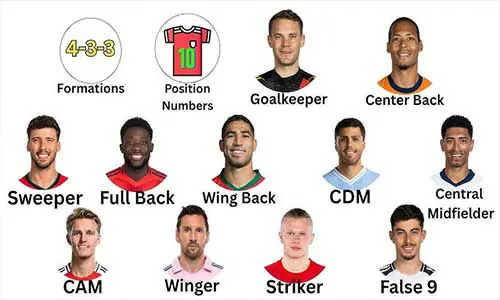
Football Position Numbers Explained: The Meaning of 1 to 11 Ahead of the FIFA World Cup 2026
Football is a global phenomenon, but its numeric language can often puzzle even the most dedicated fans. From the legendary number 10 playmaker to the uncompromising number 6, positional numbers carry immense tactical weight. As anticipation builds for the historic FIFA World Cup 2026, understanding these roles is key to appreciating the complex tactical battles on the pitch. Whether you are a casual viewer tuning in for the global showpiece or a seasoned analyst, decoding the numbers 1 to 11 reveals how modern managers organize their squads to conquer the world stage.
Historically, shirt numbers were assigned strictly based on a player’s starting position on the pitch. While modern football allows players to choose highly personalized squad numbers, the classic numbers 1 through 11 still serve as the universal blueprint for tactical roles. In this comprehensive guide, we will break down each position, analyze its evolution, and look at how these roles will shape the tactical landscape of the upcoming tournament.
Table of Contents
- The Legacy of Numbers: From Traditional Roles to the FIFA World Cup 2026
- Number 1: The Goalkeeper
- Number 2: The Right-Back
- Number 3: The Left-Back
- Number 4: The Defending Center-Back
- Number 5: The Ball-Playing Center-Back
- Number 6: The Defensive Midfielder
- Number 7: The Right Winger / Inside Forward
- Number 8: The Box-to-Box Midfielder
- Number 9: The Striker / Center-Forward
- Number 10: The Attacking Midfielder / Playmaker
- Number 11: The Left Winger
- Tactical Variations of Classic Numbers in the FIFA World Cup 2026
- Football Positions Quick Reference Table
- Rising Stars and Number Dynamics in the FIFA World Cup 2026
- Frequently Asked Questions (FAQ)
The Legacy of Numbers: From Traditional Roles to the FIFA World Cup 2026
In the early days of organized football, specifically starting in the 1920s, teams took the field wearing numbers 1 to 11. The lineup was arranged in a classic 2-3-5 formation (known as the “Pyramid”). In this setup, numbering started from the goalkeeper at 1 and worked its way up through the defenders, midfielders, and forwards, ending with the left winger at 11.
As formations evolved to the WM system, the 4-4-2, and eventually modern systems like the 4-3-3, the traditional associations of these numbers remained firmly embedded in football culture. This rich history sets the stage for how national teams will line up during the FIFA World Cup 2026. Modern tacticians often refer to “the six” or “the nine” when describing positional profiles rather than actual shirt numbers, showcasing how deeply these numerical definitions are rooted in modern coaching terminology.
How Numbering Influences Squad Depth at the FIFA World Cup 2026
When national team managers submit their final squad lists for the FIFA World Cup 2026, they will be managing a delicate balance of positional profiles. Every squad needs a mix of classic positional archetypes to survive the demanding tournament schedule. Understanding the exact duties of numbers 1 to 11 helps fans analyze which tactical systems a country might use to gain a competitive edge.
Number 1: The Goalkeeper
The undisputed anchor of the team, the number 1 is always reserved for the starting goalkeeper. Traditionally, the primary duty of the number 1 was simple: stop the ball from crossing the goal line. However, the modern game has dramatically transformed this role into a highly active tactical position.
Today’s top-tier goalkeepers act as “sweeper-keepers.” They must possess exceptional footwork, the ability to play under intense pressure, and a wide passing range to initiate counter-attacks. During the build-up phase, the modern number 1 essentially functions as an extra outfield player, offering a passing outlet to beat high-pressing systems. Watching keepers distribute the ball with pinpoint accuracy will be essential for teams striving for success at the FIFA World Cup 2026.
Classic Examples: Lev Yashin, Manuel Neuer, Alisson Becker, Ederson.
Number 2: The Right-Back
Positioned on the right side of the defensive line, the number 2 was historically tasked solely with defending the right flank and stopping opposition left wingers. While defensive discipline remains a core requirement, the modern right-back is expected to contribute heavily to the team’s attacking play.
Modern right-backs are often elite athletes with incredible stamina, running up and down the sideline to provide width, deliver crosses, and occasionally cut inside to act as inverted midfielders. In systems that favor high-pressing, the number 2 acts as a vital tactical weapon during the fast-paced matches of the FIFA World Cup 2026, transforming from a traditional defender into an auxiliary winger in a matter of seconds.
Classic Examples: Cafu, Gary Neville, Kyle Walker, Achraf Hakimi.
Number 3: The Left-Back
Mirroring the right-back, the number 3 operates on the left side of the defense. Historically a defensive specialist, the modern left-back must possess excellent technical ability, passing accuracy, and overlapping capabilities to support the attacking winger.
In contemporary tactics, some managers use asymmetric fullbacks, where one side attacks aggressively while the other tucks inside to form a temporary back-three during possession. Having a versatile left-back who can defend robustly and provide attacking width will be a vital component of defensive setups in the FIFA World Cup 2026. Their ability to deliver precise crosses with their left foot can break down even the most stubborn defensive low blocks.
Classic Examples: Paolo Maldini, Roberto Carlos, Ashley Cole, Andrew Robertson.
Number 4: The Defending Center-Back
The number 4 traditionally represents the defensive powerhouse of the backline. Positioned in the heart of the defense, this player is responsible for organizing the defensive line, winning physical battles, blocking shots, and dominating aerial duels.
While physical dominance is still highly valued, modern number 4s must also read the game exceptionally well to intercept passes before they reach the striker. Composure, positional discipline, and leadership are the defining traits of this role. In the high-pressure environment of the FIFA World Cup 2026, a calm, commanding number 4 can be the difference between maintaining a clean sheet and crashing out of the tournament.
Classic Examples: Virgil van Dijk, John Terry, Sergio Ramos, Alessandro Nesta.
Number 5: The Ball-Playing Center-Back
Operating alongside the number 4, the number 5 is traditionally the ball-playing center-back. In older tactical eras, this player might have played as a “libero” or sweeper, cleaning up loose balls behind the defensive line and bringing the ball forward into midfield with elegance.
In modern football, the distinction between the 4 and the 5 has blurred, but the underlying philosophy remains: the number 5 is expected to possess superior progressive passing ability. They must be capable of launching accurate long balls to the wingers or executing sharp, line-breaking passes into the midfield. Developing play from the back line through a skilled number 5 will be crucial for breaking down compact defenses in the FIFA World Cup 2026.
Classic Examples: Franz Beckenbauer, Carles Puyol, Rio Ferdinand, John Stones.
Number 6: The Defensive Midfielder
Often referred to as the “anchor” or the “pivot,” the number 6 sits directly in front of the central defenders. This position is one of the most tactically demanding roles in modern football. The primary job of the number 6 is to shield the defense, break up opposition attacks, and recycle possession quickly.
A top-tier number 6 dictates the tempo of the entire match. They must have 360-degree spatial awareness, allowing them to receive the ball in tight spaces under heavy pressure and safely distribute it to more creative players. Whether playing as a destructive tackling midfielder or a deep-lying playmaker (regista), the performance of the number 6 will decide the outcome of many crucial battlegrounds during the FIFA World Cup 2026.
Classic Examples: Claude Makélélé, Sergio Busquets, Andrea Pirlo, Rodri.
Number 7: The Right Winger / Inside Forward
The number 7 is historically associated with flair, speed, and match-winning capabilities. Operating on the right wing, the traditional number 7 was a direct winger who looked to beat their fullback on the outside and deliver crosses into the penalty box.
In modern tactics, the number 7 often operates as an “inverted winger” or “inside forward.” Playing on the opposite side of their stronger foot, they cut inside toward the penalty area to shoot or create central overloads. This evolution has made the number 7 a primary goalscoring threat rather than just a creator. Explosive wingers wearing this iconic number will look to shine on the world stage at the FIFA World Cup 2026.
Classic Examples: Garrincha, David Beckham, Cristiano Ronaldo, Kylian Mbappé.
Number 8: The Box-to-Box Midfielder
The number 8 is the tireless engine room of the midfield. This box-to-box midfielder connects the defensive unit with the attacking force. A complete number 8 must have the stamina to sprint back and assist the number 6 defensively, and then immediately burst forward to support the strikers in the opposition box.
Tactical versatility is the hallmark of the number 8. They must be adept at tackling, intercepting, dribbling, and scoring from distance. In modern high-tempo systems, the tactical and physical demands on this position are immense. Midfielders who can successfully navigate the grueling physical demands of the FIFA World Cup 2026 will give their nations a massive physical and tactical advantage.
Classic Examples: Steven Gerrard, Frank Lampard, Andres Iniesta, Jude Bellingham.
Number 9: The Striker / Center-Forward
The number 9 is the ultimate focal point of the attack. Traditionally, this player is the primary goalscorer—a physical presence who leads the line, holds up the ball against opposing central defenders, and excels at finishing chances inside the penalty area.
Even with the tactical rise of the “false nine” (a playmaker who drops deep to pull defenders out of position), the classic, physical number 9 is experiencing a major renaissance in modern football. National teams need clinical goalscorers who can convert half-chances under extreme pressure. Consequently, the performance of the target man will be the most critical role to watch at the FIFA World Cup 2026.
Classic Examples: Ronaldo Nazário, Alan Shearer, Robert Lewandowski, Erling Haaland.
Number 10: The Attacking Midfielder / Playmaker
No other number in football carries as much romanticism, pressure, and prestige as the number 10. Historically reserved for the team’s creative mastermind, the number 10 operates in the “pocket of space” between the opposition’s midfield and defense.
The number 10 is responsible for creating goalscoring opportunities through visionary passing, dribbling, and tactical ingenuity. While classic, stationary playmakers have largely been replaced by more energetic, pressing attacking midfielders, the demand for pure creative genius remains. In the tight, highly organized knockout rounds, a moment of magic from a number 10 will be needed to unlock defenses at the FIFA World Cup 2026.
Classic Examples: Pelé, Diego Maradona, Zinedine Zidane, Lionel Messi.
Number 11: The Left Winger
Rounding out the classic lineup, the number 11 occupies the left wing. Traditionally, this was a quick, direct winger who used their left foot to whip dangerous crosses into the box for the number 9.
Similar to the right side, the modern left winger is often an inverted attacker who cuts inside onto their stronger right foot to shoot. This position requires elite 1v1 dribbling skills, explosive pace, and excellent spatial awareness to exploit gaps in the opposition’s defensive line. These dynamic wingers will serve as primary creative outlets during the FIFA World Cup 2026.
Classic Examples: Ryan Giggs, Ronaldinho, Neymar, Mohamed Salah.
Tactical Variations of Classic Numbers in the FIFA World Cup 2026
Modern tactics are fluid, and rigid positions are rapidly becoming a thing of the past. During the tactical chess matches of the FIFA World Cup 2026, we will see systems where positions dynamically shift depending on whether a team has possession of the ball or is defending.
For instance, a team lining up in a basic 4-3-3 formation might defend in a compact 4-5-1, but transition into a highly attacking 3-2-4-1 when building from the back. In these fluid setups, players must master multiple numeric roles. A modern fullback might start as a number 2 but play much of the match as a central playmaker or a winger, illustrating why tactical intelligence is prioritized above all else in modern squad selection.
Football Positions Quick Reference Table
To help you quickly identify the core responsibilities and modern profiles of each classic shirt number, refer to this handy reference guide:
| Number | Traditional Position Name | Key Tactical Attribute | Modern Tactical Role |
|---|---|---|---|
| 1 | Goalkeeper | Shot-stopping, Aerial Claiming | Sweeper-Keeper, Playmaking from Deep |
| 2 | Right-Back | 1v1 Defending, Crossing | Overlapping Winger, Inverted Midfielder |
| 3 | Left-Back | Positional Discipline, Stamina | Asymmetric Attacking Winger or Third Center-Back |
| 4 | Center-Back (Defensive) | Tackling, Leadership, Physicality | Defensive Organizer, High-Line Coverage |
| 5 | Center-Back (Ball-Playing) | Passing, Composure, Vision | Progressive Passer, Deep Builder |
| 6 | Defensive Midfielder | Interceptions, Tactical Discipline | Single/Double Pivot, Transition Controller |
| 7 | Right Winger | Pace, Acceleration, Dribbling | Inverted Forward, Goalscoring Winger |
| 8 | Box-to-Box Midfielder | Endurance, Off-the-ball Movement | Midfield Engine, Late Box Runner |
| 9 | Center-Forward / Striker | Clinical Finishing, Hold-up Play | Target Man, Pressing Forward, False Nine |
| 10 | Attacking Midfielder | Creativity, Vision, Passing Range | Creative Spark, Half-Space Exploiter |
| 11 | Left Winger | Agility, Crossing, Directness | Inverted Playmaker, Inside Forward |
Rising Stars and Number Dynamics in the FIFA World Cup 2026
As young prodigies aim to make their mark on the FIFA World Cup 2026, they will do so while carrying the heavy expectations of these legendary numbers. Wearing the number 9 or number 10 jersey for a powerhouse nation brings immense pressure, but it also provides a global platform to achieve legendary status.
We are likely to see tactical innovations where players wearing non-traditional squad numbers (like 21, 47, or 82) execute classic positional duties with modern twists. The tactical fluidity displayed across host cities in Canada, Mexico, and the United States will redefine how future generations view these classic shirt numbers.
Frequently Asked Questions (FAQ)
Q1: What is the main difference between a number 6 and a number 8 in football?
A: The number 6 is a defensive midfielder who primarily protects the defense and controls the tempo from deep. The number 8 is a box-to-box midfielder with a more balanced role, contributing heavily to both defense and attack across the entire pitch.
Q2: Why is the number 10 shirt considered the most famous in football history?
A: The number 10 is traditionally worn by the team’s most creative playmaker. It gained legendary status because it was worn by all-time greats like Pelé, Diego Maradona, and Lionel Messi, who defined generations with their extraordinary skill and vision.
Q3: Can players wear squad numbers higher than 11 in the FIFA World Cup 2026?
A: Yes, modern international tournaments allow squad numbers up to 26 (depending on the final squad size approved by FIFA). However, players still fulfill the functional roles associated with the traditional 1-11 positions on the pitch.
Q4: What is a “False Nine” and how does it relate to the traditional number 9?
A: A traditional number 9 plays high up the pitch as a target man. A “False Nine” is an unconventional striker who drops deep into midfield to draw defenders out of position, creating space for wingers (numbers 7 and 11) to run into.
Q5: Why did football teams start using numbers on their shirts?
A: Shirt numbers were introduced to help referees, fans, and journalists identify players and their positions on the pitch. They were first used officially in English league matches in the late 1920s before becoming a global standard.
Q6: How will modern tactical trends shape the position numbers in the FIFA World Cup 2026?
A: We will see highly versatile players who break traditional mold boundaries. For example, defensive midfielders (number 6) dropping back to play as center-backs, and fullbacks (numbers 2 and 3) sliding into midfield to control central areas.
Conclusion: The Ultimate Tactical Showcase
Football position numbers 1 to 11 are far more than just random digits printed on jersey fabric; they represent the rich history, tactical evolution, and artistic beauty of the beautiful game. As we head into the highly anticipated FIFA World Cup 2026, these traditional positions will serve as the foundation for the most advanced tactical systems ever witnessed on a football pitch.
Understanding these classic roles gives you a deeper appreciation of the tactical battles that lie ahead. Which player or nation do you think will define their respective position on the grand stage? Let us know your thoughts, and get ready to witness tactical history in the making!
For official squad announcements, tournament news, and tactical rules, check out the official FIFA Official Website and explore deep tactical breakdowns on UEFA’s Analysis Portal.