FIFA World Cup Trophy History: Who Owns and Keeps the Original Cup?
FIFA World Cup Trophy History: Who Owns and Keeps the Original Cup? Road to Football world cup 2026
The global anticipation for the Football world cup 2026 is reaching unprecedented heights as fans prepare for a historic, expanded tournament. Beyond the tactical masterclasses, intense rivalries, and jaw-dropping goals, players from every continent dream of holding a single, legendary object: the FIFA World Cup Trophy. For decades, this glistening golden prize has stood as the ultimate symbol of athletic excellence. Yet, behind its glorious appearance lies a rich tapestry of drama, heist, controversy, and mystery. Many passionate fans wonder: Who actually owns the original trophy, and do the winning countries get to keep it? As we count down to the highly anticipated tournament, this comprehensive article explores the fascinating history of football’s ultimate prize.
Table of Contents:
- The Prestige of the World Cup Trophy Ahead of the Football world cup 2026
- The Legendary Journey: From Jules Rimet to the Football world cup 2026
- Designing the Modern Masterpiece: The Silvio Gazzaniga Era
- Who Owns and Keeps the Original Cup?
- Comparing the Two Historic World Cup Trophies
- The Changing Rules: Security Safeguards and the Football world cup 2026
- Historical Timeline of the World Cup Trophy
- Frequently Asked Questions About the Trophy and the Football world cup 2026
- Conclusion: The Ultimate Football world cup 2026 Glory Awaits
The Prestige of the World Cup Trophy Ahead of the Football world cup 2026
The beautiful game has witnessed many glorious moments, but none compare to the prestige of lifting the golden trophy that will culminate in the historic Football world cup 2026. This prize is not merely an accolade; it represents a century of athletic triumph, national pride, and unforgettable moments of drama. For any professional footballer, raising this golden sculpture is the absolute pinnacle of their career.
Furthermore, as the tournament expands to include 48 teams across three host nations, the desire to secure this iconic prize is greater than ever before. When the grand final of the Football world cup 2026 takes place, the world will stop to watch which team earns the right to write their name on its historic base. Understanding the physical and symbolic weight of this prize helps us appreciate the monumental effort players put into winning it.
Indeed, the trophy is treated with the level of security and reverence typically reserved for royal jewels or priceless historical artifacts. Only a highly exclusive group of people are legally permitted to touch it with their bare hands. This mystique adds to its allure, making the battle for the prize a truly legendary event.
The Legendary Journey: From Jules Rimet to the Football world cup 2026
To fully understand the modern era of the sport, we must travel back in time to the tournament’s inception. Long before the Football world cup 2026 expanded the tournament to a multi-national spectacle, the competition relied on a completely different trophy with a dramatic history of its own.
The Jules Rimet Era (1930–1970)
The original trophy, named “Victory,” was designed by French sculptor Abel Lafleur. It was later renamed the Jules Rimet Trophy to honor the visionary FIFA president who helped establish the tournament. The sculpture depicted Nike, the ancient Greek goddess of victory, holding a decagonal chalice aloft. It was made of gold-plated sterling silver resting on a blue lapis lazuli base.
Hiding from World War II in a Shoebox
During World War II, the Jules Rimet Trophy faced significant danger of being looted by Nazi forces occupying Italy. To prevent this, Ottorino Barassi, the Italian vice-president of FIFA, secretly removed the trophy from a bank vault in Rome. He hid it inside a simple shoebox under his bed for several years. Thanks to his bravery, the trophy survived the global conflict completely unharmed.
Stolen in London and Found by Pickles the Dog
In 1966, just months before England was set to host the tournament, the trophy was stolen from a public exhibition at Westminster Central Hall. The British police were baffled, and a national crisis ensued. Fortunately, a week later, a black-and-white Collie dog named Pickles sniffed out a package wrapped in old newspaper under a garden hedge in South London. Pickles became an overnight hero, and the tournament proceeded without further incident.
Permanent Ownership and Tragic Theft in Brazil
In 1970, Brazil won its third World Cup title in Mexico. Under the rules of that era, any nation winning the tournament three times was granted permanent ownership of the physical trophy. Brazil proudly displayed the Jules Rimet Trophy at their football confederation headquarters in Rio de Janeiro. However, in 1983, thieves broke in and stole the prize. It was never recovered, and authorities believe the thieves melted it down for its precious metal, ending the physical legacy of the original prize.
This dramatic history forms the historical backdrop of the upcoming Football world cup 2026. It serves as a stark reminder of why FIFA operates under vastly different, highly secured guidelines today.
Designing the Modern Masterpiece: The Silvio Gazzaniga Era
After Brazil took permanent possession of the Jules Rimet Trophy in 1970, FIFA had to commission a brand-new trophy for the 1974 tournament. They launched a design competition that attracted 53 submissions from sculptors across seven countries. The winning design was created by the renowned Italian artist Silvio Gazzaniga, working alongside the GDE Bertoni company in Milan.
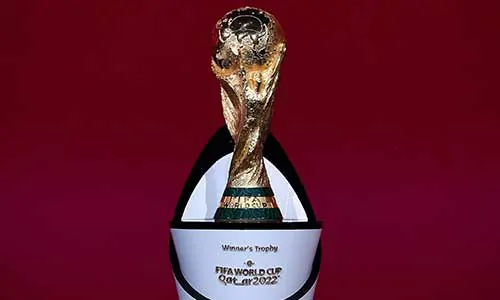
Gazzaniga’s design broke away from the traditional “cup” aesthetic. It featured two triumphant human figures rising in spirals from the base, stretching out to hold a depiction of the Earth in their hands. The artist described it as a dynamic representation of athletic effort, harmony, and the universality of the sport.
The physical specifications of this modern masterpiece are truly impressive:
- Material: 18-karat solid gold (composed of 75% pure gold).
- Height: 36.8 centimeters (14.5 inches).
- Weight: Approximately 6.175 kilograms (13.61 pounds).
- Base: Two bands of dark green malachite, a semi-precious stone.
Interestingly, scientific experts have noted that the trophy must be hollow on the inside. If it were a completely solid block of gold, it would weigh roughly 70 kilograms, making it practically impossible for victorious captains to lift easily above their heads during post-match celebrations.
Who Owns and Keeps the Original Cup?
The question of ownership is a frequent topic of debate among football enthusiasts. Under current regulations, FIFA retains absolute and permanent ownership of the original solid gold World Cup trophy. No country, regardless of how many times they win the tournament, is ever allowed to keep the original cup permanently.
Can the Winners of the Football world cup 2026 Keep the Trophy?
No, whoever lifts the prize at the Football world cup 2026 will not be taking the original solid gold trophy back to their home country. This protocol is strictly enforced under the modern guidelines that govern the Football world cup 2026.
Immediately after the final match, the original trophy is brought onto the pitch under heavy security for the official presentation. The winning team gets to experience the magical moment of lifting and celebrating with the authentic solid-gold trophy. However, once the celebration of the Football world cup 2026 ends and the team leaves the pitch, the original is returned directly to FIFA officials.
In its place, the champion of the Football world cup 2026 receives the official FIFA World Cup Winners’ Trophy. This is a high-quality replica made of gold-plated bronze or brass alloy. The winning nation keeps this replica forever as a symbol of their historic triumph, while the original is returned to its secure display case at the FIFA Museum in Zurich, Switzerland. This careful process ensures the original is safeguarded for future editions after the Football world cup 2026.
Comparing the Two Historic World Cup Trophies
To help visualize the evolution of these legendary awards, the table below outlines the differences between the original Jules Rimet Trophy and the current FIFA World Cup Trophy:
| Feature | Jules Rimet Trophy (1930–1970) | FIFA World Cup Trophy (1974–Present) |
|---|---|---|
| Designer | Abel Lafleur (France) | Silvio Gazzaniga (Italy) |
| Depiction | Nike (Greek Goddess of Victory) | Two human figures holding up the Earth |
| Material | Gold-plated sterling silver on lapis lazuli | 18-karat solid gold (hollow) on malachite |
| Weight | 3.8 kilograms (8.4 lbs) | 6.175 kilograms (13.61 lbs) |
| Height | 35 centimeters (13.8 inches) | 36.8 centimeters (14.5 inches) |
| Current Location | Stolen in 1983 (believed to be melted) | FIFA Museum in Zurich, Switzerland |
The Changing Rules: Security Safeguards and the Football world cup 2026
As we transition into the Football world cup 2026 era, it becomes clear that security rules have evolved dramatically since the 20th century. The double thefts of 1966 and 1983 taught football’s governing body a painful lesson. Consequently, leaving a multi-million dollar gold masterpiece in the custody of individual football associations was deemed too risky.
In 2005, FIFA officially put an end to the practice of letting the winning country keep the original trophy even temporarily. Since then, the original trophy has remained under lock and key in Switzerland, only traveling for official tours under armed security. This safety-first approach is of paramount importance, especially with the immense scale of the Football world cup 2026, which spans dozens of cities across Canada, Mexico, and the United States.
Historical Timeline of the World Cup Trophy
- 1930: Uruguay wins the inaugural tournament and lifts the first trophy, originally named “Victory.”
- 1946: The first trophy is officially renamed the “Jules Rimet Trophy.”
- 1966: The trophy is stolen in London and successfully retrieved by Pickles the dog.
- 1970: Brazil wins its third title and is awarded the original Jules Rimet Trophy in perpetuity.
- 1974: The modern FIFA World Cup Trophy, designed by Silvio Gazzaniga, makes its debut.
- 1983: The original Jules Rimet Trophy is stolen from Rio de Janeiro and lost forever.
- 2005: FIFA changes the security rules, ensuring winners only receive replicas.
- 2026: The tournament expands to 48 teams, setting the stage for the Football world cup 2026.
Frequently Asked Questions About the Trophy and the Football world cup 2026
Who gets to keep the original trophy at the end of the Football world cup 2026?
No country gets to keep the original trophy. FIFA retains permanent ownership of the original solid-gold cup, which is safely kept at the FIFA Museum in Zurich. The winning nation of the Football world cup 2026 will be given a gold-plated bronze replica to take home and display permanently.
Is the World Cup trophy solid gold?
Yes, the current trophy is made of 18-karat solid gold. However, it is structurally hollow on the inside. If it were completely solid throughout, it would weigh approximately 70 kilograms, making it far too heavy for athletes to raise aloft during victory ceremonies.
Who is allowed to touch the original FIFA World Cup Trophy?
According to strict FIFA protocols, only an exclusive group of people are permitted to handle the original trophy with bare hands. This group is limited to former World Cup winners (players and managers) and serving heads of state.
What happens if a nation wins the World Cup three times now?
Unlike the old rules that applied to the Jules Rimet Trophy, the winner of the Football world cup 2026 or any future tournament will not receive the original trophy permanently, regardless of how many times they win. The rule granting permanent ownership was permanently abolished after 1970.
Are the names of the winning countries engraved on the original trophy?
Yes, the names of the winning nations are engraved on the base of the original trophy. The engravings are arranged in a spiral on the bottom plate. The current design has enough space to accommodate the names of every winning country until the 2038 edition of the tournament.
How much is the original FIFA World Cup Trophy worth?
While the physical gold and malachite materials of the trophy are worth several hundred thousand dollars, its cultural, historical, and sporting value is estimated to be over $20 million, making it the most expensive trophy in global sports.
Conclusion: The Ultimate Football world cup 2026 Glory Awaits
The journey of the FIFA World Cup Trophy is a testament to the passion, drama, and magic of football. From the heroic actions of FIFA officials hiding the trophy under a bed during World War II, to the security adjustments that protect today’s solid gold masterpiece, this prize remains the ultimate dream for every player on the planet. As history will be made during the Football world cup 2026, the world prepares to witness another legendary chapter in the trophy’s storied history.
The countdown has begun. Which country do you believe will have their name engraved on the base of the original trophy next? Join the conversation in the comments below and share your predictions for the Football world cup 2026!
For more detailed historical archives and official schedules, feel free to visit the Official FIFA Website and explore the interactive collections at the FIFA Museum.