FIFA World Cup 2026 Venues: Iconic Stadiums Hosting the Tournament
The global sporting community is eagerly preparing for the FIFA World Cup 2026, which promises to be the largest and most ambitious edition of the tournament to date. For the first time in history, the tournament will expand to feature 48 teams, meaning a massive lineup of 104 matches will be played across the continent. To support an event of this magnitude, three giant North American nations—the United States, Mexico, and Canada—have joined forces to co-host the games.
Consequently, finding your way around the official FIFA World Cup 2026 venues is essential for understanding how this monumental event will unfold. Organizers have carefully selected 16 of the most modern, technologically advanced, and historically significant stadium venues across North America. Therefore, whether you are planning to attend in person or follow the matches from home, this comprehensive guide will give you an in-depth tour of the legendary arenas hosting the tournament.
Table of Contents
- Overview of the FIFA World Cup 2026 Joint Bid
- United States Venues: 11 Modern Coloseums
- Mexico Venues: Three Historic Temples of Football
- Canada Venues: The Great White North Stages
- Key Match Allocations and Venue Metrics
- Sustainability and Tech Innovations in Modern Stadiums
- Preparing for the Ultimate Fan Experience
- Conclusion: Witnessing Football History
- Frequently Asked Questions (FAQs)
Overview of the FIFA World Cup 2026 Joint Bid
In June 2018, the “United 2026” bid officially triumphed, earning the rights to bring the world’s most popular sport back to North America. This historic tournament represents the first-ever three-nation joint hosting model, spreading matches over massive distances and diverse climates. Furthermore, it marks the return of the event to its traditional June-July summer schedule after the winter-held tournament in Qatar in 2022.
Mexico is set to become the first country to host or co-host the men’s tournament three times, having previously staged it in 1970 and 1986. The United States will host the tournament for the second time, building on the success of the historic 1994 edition. Canada, on the other hand, is hosting the senior men’s showpiece for the first time, bringing an immense wave of excitement to sports fans across the country.
Additionally, organizing matches across three vast countries means managing different environments, elevations, and local cultures. To address these logistics, the 16 selected venues have been divided into three distinct geographic regions: Western, Central, and Eastern. This division ensures optimized travel logistics for both national teams and traveling supporters alike.
United States Venues: 11 Modern Coloseums
The United States boasts the lion’s share of the stadium network, with 11 ultra-modern arenas selected to host matches. Most of these venues are home to prominent NFL franchises, built to handle massive crowds and deliver spectacular entertainment value.
New York New Jersey Stadium (MetLife Stadium)
Located in East Rutherford, New Jersey, just across the Hudson River from New York City, this massive open-air venue is the absolute crown jewel of the tournament. It has been officially selected to host the grand final of the FIFA World Cup 2026 on July 19, 2026.
Boasting a capacity of approximately 82,500 seats, this multipurpose stadium opened in 2010 and has hosted some of the biggest entertainment events in the world, including the Super Bowl and major international soccer finals. Its strategic location and unmatched transport access make it the perfect stage for the final match.
Dallas Stadium (AT&T Stadium)
Situated in Arlington, Texas, Dallas Stadium is a masterpiece of modern engineering. Known locally for its retractable roof and one of the largest high-definition hanging video screens in the world, the venue provides an incredible viewing experience from every seat.
With an estimated tournament capacity of 94,000, it stands as the largest venue by volume in this edition. Consequently, Dallas Stadium has been awarded several major knockout matches, including a highly anticipated semi-final fixture.
Los Angeles Stadium (SoFi Stadium)
Nestled in Inglewood, California, Los Angeles Stadium is widely regarded as one of the most expensive and architecturally advanced sporting arenas ever constructed. Its elegant translucent canopy and double-sided 4K video board provide a breathtaking environment.
The stadium is designated to host the opening match for the United States Men’s National Team (USMNT) on June 12, 2026. This selection underscores the stadium’s elite status and its central role in California’s sporting legacy.
Atlanta Stadium (Mercedes-Benz Stadium)
Recognized for its unique pinwheel retractable roof and circular halo video screen, Atlanta Stadium in Georgia is a fan favorite. This futuristic venue has a capacity of around 75,000 for soccer matches.
Furthermore, it is a pioneer in eco-friendly stadium design, holding a LEED Platinum certification for green building standards. The stadium will host a series of high-profile group and knockout games, including one of the semi-finals.
Miami Stadium (Hard Rock Stadium)
Located in Miami Gardens, Florida, Miami Stadium has long served as a key destination for global sports, regularly hosting the Super Bowl, Formula 1, and elite tennis tournaments. Its open-air design is equipped with a state-of-the-art canopy that shields 90% of spectators from the sun and rain.
The stadium’s capacity sits at around 65,000, and it has been selected to host the coveted third-place play-off match. Supporters can look forward to a vibrant, tropical atmosphere in one of America’s most multicultural cities.
Kansas City Stadium (Arrowhead Stadium)
Recognized by the Guinness World Records as the loudest outdoor sports arena in the world, Kansas City Stadium in Missouri is historic. Built in 1972 and extensively renovated, it can hold over 73,000 passionate fans.
This venue is scheduled to host multiple high-stakes fixtures, including a key quarter-final match. The sheer volume and energy of the local crowd are bound to provide some of the most memorable moments of the tournament.
Seattle Stadium (Lumen Field)
Perched close to downtown Seattle, Washington, Seattle Stadium is legendary for its steep seating bowl that amplifies fan noise. Offering stunning views of the Seattle skyline and the adjacent Elliot Bay, it represents the heart of Pacific Northwest soccer culture.
With a tournament capacity of about 69,000, the open-air stadium will host group-stage fixtures and a highly anticipated Round of 16 match, bringing intense local energy to the global spotlight.
Houston Stadium (NRG Stadium)
Located in Houston, Texas, this venue was the first facility in NFL history to feature a fully retractable roof system. It has a long track record of hosting massive events, from Super Bowls to historic international friendlies.
Boasting a capacity of roughly 72,000, Houston Stadium will host multiple group-stage matches and a Round of 16 encounter, offering top-tier hospitality and comfort to visiting fans.
San Francisco Bay Area Stadium (Levi’s Stadium)
Located in Santa Clara, California, San Francisco Bay Area Stadium is a highly sustainable, tech-forward venue. It features a beautiful solar-paneled green roof and an advanced smart network to keep fans connected.
Holding over 71,000 spectators, this venue is set to host several crucial group stage fixtures and early knockout rounds, linking Silicon Valley with the world’s favorite sport.
Boston Stadium (Gillette Stadium)
Situated in Foxborough, Massachusetts, Boston Stadium is deeply embedded in American sporting history. It has recently undergone significant upgrades, including the installation of a massive new outdoor video board and a brand-new lighthouse landmark.
Holding approximately 65,000 fans, the stadium will host several matches, including a high-profile quarter-final game, continuing its rich legacy of hosting elite sporting moments.
Philadelphia Stadium (Lincoln Financial Field)
Known for its intense, passionate fan base, Philadelphia Stadium in Pennsylvania offers excellent sightlines and an energetic atmosphere. This open-air venue is fully equipped to host massive global crowds.
With a capacity of 69,000, the stadium will host several group-stage matches and a Round of 16 clash, coinciding beautifully with the city’s historic American semiquincentennial celebrations in 2026.
Mexico Venues: Three Historic Temples of Football
Mexico brings a deep-rooted footballing passion and legendary history to the tournament. Its three chosen stadiums range from historic monuments to cutting-edge modern wonders.
Mexico City Stadium (Estadio Azteca)
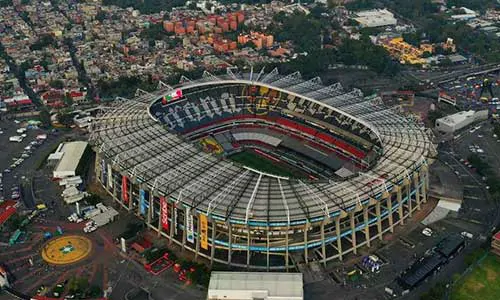
No stadium on earth carries quite as much legendary weight as the iconic Estadio Azteca in Mexico City. It is the sacred ground where Pelé lifted the trophy in 1970 and where Diego Maradona scored his historic “Hand of God” and “Goal of the Century” in 1986.
When it hosts the opening match of the FIFA World Cup 2026 on June 11, 2026, it will make history as the first venue to host three World Cup opening matches. Holding a capacity of roughly 83,000, its atmosphere is expected to be electric.
Estadio Monterrey (Estadio BBVA)
Affectionately nicknamed “El Gigante de Acero” (The Steel Giant) due to its magnificent metallic structure, Estadio Monterrey is a visual masterpiece. Opened in 2015, the stadium offers spectators a breathtaking view of the iconic Cerro de la Silla mountain directly from the stands.
With an active tournament capacity of over 53,000, this modern venue is prepared to host several group-stage fixtures and a crucial Round of 32 matchup, providing some of the most scenic backdrops in football history.
Estadio Guadalajara (Estadio Akron)
Located in Zapopan, Jalisco, Estadio Guadalajara features a highly unique architectural design. The exterior of the stadium resembles a grass-covered volcano, blending seamlessly into the local landscape while supporting a spectacular white canopy.
Holding around 48,000 spectators, it provides an intimate, top-tier viewing experience. It will host multiple group stage fixtures, where local Guadalajara fans are sure to create a vibrant fiesta atmosphere.
Canada Venues: The Great White North Stages
Canada is preparing to make its historic mark as a World Cup co-host by utilizing two top-class venues that represent the east and west coasts of the nation.
BC Place Vancouver
Located on the scenic coast of British Columbia, BC Place is an iconic venue featuring the largest cable-supported retractable roof system in the world. Having hosted the 2015 Women’s World Cup Final, it has extensive tournament experience.
With a tournament capacity of approximately 54,000, the stadium has been allocated seven matches, including Canada’s second and third group-stage games, as well as crucial Round of 32 and Round of 16 fixtures.
Toronto Stadium (BMO Field)
Situated directly along Toronto’s vibrant lakeshore at Exhibition Place, Toronto Stadium is being temporarily expanded to meet the strict capacity guidelines of approximately 45,000 seats. It is known for its intimate, English-style design that places fans incredibly close to the pitch.
This venue will host Canada’s historic opening match on June 12, 2026. Ultimately, it will serve as the perfect Eastern hub for Canadian football fans cheering on their national team.
Key Match Allocations and Venue Metrics
The structural landscape of the tournament shows a strategic distribution of games to minimize travel distances. Below is a comparative table of the selected stadiums, their locations, capacities, and highlighted roles:
| Official Stadium Name | Host City & Country | Capacity | Major Match Allocation |
|---|---|---|---|
| New York New Jersey Stadium | East Rutherford, USA | 82,500 | Grand Final (July 19) |
| Dallas Stadium | Arlington, USA | 94,000 | Semi-final, Knockout stages |
| Mexico City Stadium | Mexico City, Mexico | 83,000 | Opening Match (June 11) |
| Atlanta Stadium | Atlanta, USA | 75,000 | Semi-final, Knockout stages |
| Los Angeles Stadium | Inglewood, USA | 70,000 | USMNT Opener, Quarter-final |
| Miami Stadium | Miami Gardens, USA | 65,000 | Third-place Play-off |
| BC Place Vancouver | Vancouver, Canada | 54,000 | Round of 16, Group stage |
| Toronto Stadium | Toronto, Canada | 45,000 | Canada Opener (June 12) |
Sustainability and Tech Innovations in Modern Stadiums
A major focus of the modern stadium network is environmental sustainability and technological integration. Many of these arenas utilize solar energy, advanced water recycling systems, and high-efficiency LED lighting to minimize their ecological footprint.
For instance, venues like Atlanta Stadium and San Francisco Bay Area Stadium have earned international green-building certificates. In addition, FIFA has strictly mandated natural grass playing surfaces for all host stadiums. Consequently, arenas that traditionally feature artificial turf, such as those in Seattle, Atlanta, Dallas, and Foxborough, are installing sophisticated temporary grass systems to guarantee consistent, safe playing conditions for the athletes.
Furthermore, digital innovation is being integrated into the fan experience like never before. High-speed 5G connectivity, mobile ticketing, cashless concessions, and interactive smart-stadium apps will allow supporters to enjoy seamless navigation, food ordering, and real-time match statistics directly from their seats.
Preparing for the Ultimate Fan Experience
For soccer supporters planning to travel across North America, careful preparation is vital. Because matches span four different time zones and three massive countries, travel logistics will play a central role in your overall experience.
Fortunately, major host cities are heavily investing in public transport upgrades, dedicated shuttle services, and massive airport operations to facilitate movement. Moreover, spectacular “FIFA Fan Festivals” will be hosted in major city centers, allowing ticketless fans to gather, watch live broadcasts, and celebrate the global game together in a festive, communal environment.
On the other hand, the sheer size of North America means booking flights, hotels, and intercity travel as early as possible is highly recommended. To get official updates, schedules, and ticket guides, be sure to visit the Official FIFA Website or read about the historical context of the tournament on the Wikipedia World Cup Page.
Conclusion: Witnessing Football History
The upcoming tournament is set to be a historic, groundbreaking celebration of global sport, and these 16 iconic stadiums will serve as the perfect backdrops. From the historic grandeur of Mexico City’s Estadio Azteca to the futuristic luxury of the New York New Jersey Stadium, each venue offers a unique charm and high-class amenities.
Ultimately, this tournament is not just about expanding the number of teams; it is about uniting different cultures through the beautiful game. Are you ready to witness the spectacular matches in person? Start planning your journey early, keep an eye on ticket sales, and prepare to be part of a truly unforgettable sporting era!
Frequently Asked Questions (FAQs)
Which stadium will host the final of the FIFA World Cup 2026?
The grand final of the tournament will be held at the New York New Jersey Stadium (commonly known as MetLife Stadium) in East Rutherford, New Jersey, on July 19, 2026.
How many countries are hosting the FIFA World Cup 2026?
The tournament is being jointly co-hosted by three countries: the United States, Mexico, and Canada. This represents the first-ever three-nation joint host model in the tournament’s history.
What is the largest stadium by capacity in the FIFA World Cup 2026?
Dallas Stadium (AT&T Stadium) in Arlington, Texas, is the largest venue by capacity, accommodating approximately 94,000 spectators for the matches.
Will grass fields be installed in all FIFA World Cup 2026 venues?
Yes. FIFA has mandated natural grass pitches for all matches. Stadiums that normally use artificial turf are installing sophisticated temporary natural grass systems for the tournament.
How many matches are being played in the FIFA World Cup 2026?
Due to the expansion to 48 teams, a total of 104 matches will be played, featuring 72 group-stage games and an expanded knockout round starting with the Round of 32.
Where will the opening match of the tournament take place?
The historic opening match will be played on June 11, 2026, at the legendary Estadio Azteca in Mexico City, Mexico.