FIFA World Cup 2026 Stadium Guide: Locations, Capacities and Key Facts
The FIFA World Cup 2026 is set to be the most expansive and groundbreaking tournament in football history. For the very first time, the tournament will be co-hosted by three nations—Canada, Mexico, and the United States—and will feature an expanded format of 48 teams competing across 104 matches. This massive scale requires world-class infrastructure. Consequently, 16 state-of-the-art stadiums have been selected to host these high-stakes matches. Whether you are planning to travel for the matches or watching from home, this comprehensive guide covers everything you need to know about the venues. Below is a detailed breakdown of the locations, official net capacities, and key facts for every single host stadium.
Table of Contents
Overview of the FIFA World Cup 2026 Host Nations
Stretching across four different time zones, the host venues offer a fascinating mix of ultra-modern marvels and historic sporting cathedrals. Each host country brings its unique footballing culture to the table. Canada makes its debut as a men’s tournament co-host, while the United States welcomes the world back after hosting the historic 1994 tournament. Meanwhile, Mexico is making history by becoming the first nation to host or co-host the men’s World Cup for a third time, having previously hosted in 1970 and 1986.
To comply with FIFA’s strict marketing and anti-ambush policies, many stadiums will adopt generic, sponsor-free names during the tournament. Consequently, corporate-named venues like SoFi Stadium or AT&T Stadium will be formally referred to by their city-associated names. Let us dive deep into the specific regions and examine the venues where soccer history will be made.
Canada Host Stadiums
Canada will host matches in two vibrant metropolitan hubs, one on the east coast and one on the west coast. These intimate stadiums will offer fans exceptional sightlines and close proximity to the pitch.
Toronto Stadium (BMO Field)
- Location: Toronto, Ontario
- Net Capacity: 44,315
- Year Opened: 2007
Toronto Stadium is a purpose-built soccer facility originally constructed to host the FIFA U-20 World Cup in 2007. Over the years, it has become the home of Toronto FC in Major League Soccer and the Canadian men’s national team. To prepare for the FIFA World Cup 2026, the stadium is undergoing temporary seating expansions to reach the minimum capacity threshold required by FIFA. Located on the historic Exhibition Place grounds, it provides walkable access to downtown Toronto, making it an incredibly convenient venue for international travelers.
BC Place Vancouver
- Location: Vancouver, British Columbia
- Net Capacity: 48,821
- Year Opened: 1983
BC Place is located on the edge of False Creek in Vancouver. It features a highly recognizable retractable roof system and is known for its beautiful view of the British Columbia skyline. BC Place hosted the 2015 FIFA Women’s World Cup Final, making it a highly experienced soccer host. Although the stadium normally uses an artificial turf field, a temporary, high-tech natural grass pitch will be installed specifically for the summer matches of 2026.
Mexico Host Stadiums
Mexico’s contribution to the tournament is centered around iconic, high-capacity stadiums that have generated legendary atmospheres for decades. These stadiums will play host to passionate home crowds and elite international match-ups.
Estadio Azteca (Mexico City Stadium)
- Location: Mexico City
- Net Capacity: 72,766 (expandable to 83,000+)
- Year Opened: 1966
No stadium in world football carries as much historical weight as Estadio Azteca. It was the stage where Pelé lifted the trophy in 1970, and where Diego Maradona scored his famous “Hand of God” and “Goal of the Century” goals in 1986. Following massive renovations completed in early 2026, the stadium has been optimized for the modern era. Estadio Azteca will host the official opening match of the FIFA World Cup 2026 on June 11, cementing its status as the crown jewel of Mexican football history.
Estadio Guadalajara (Estadio Akron)
- Location: Zapopan, Jalisco
- Net Capacity: 44,330
- Year Opened: 2010
Commonly known as Estadio Akron, this architectural masterpiece was designed to mimic the shape of a smoking volcano, complete with grass-covered slopes. It is the home of CD Guadalajara (Chivas), one of Mexico’s most popular clubs. The stadium offers incredibly steep stands that bring the crowd close to the action, creating a hostile environment for visiting teams. Furthermore, it is renowned for its eco-friendly design, featuring rainwater collection systems and highly efficient power usage.
Estadio Monterrey (Estadio BBVA)
- Location: Guadalupe, Nuevo León
- Net Capacity: 50,113
- Year Opened: 2015
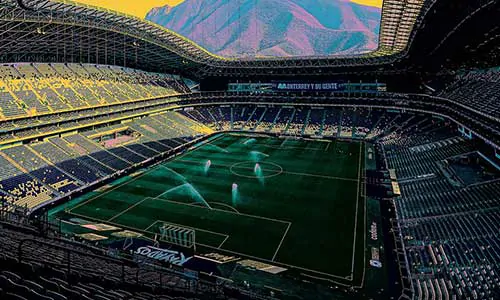
Estadio Monterrey, famously nicknamed “The Steel Giant,” is widely considered one of the most visually stunning venues in North America. This stadium is celebrated for its unique structural design, which offers a breathtaking view of the Cerro de la Silla mountain directly through the open end of the stadium bowl. As one of Mexico’s newest stadiums, it features highly modern hospitality areas, premium suites, and a perfectly manicured playing surface designed to thrive in Monterrey’s hot summer climate.
United States Host Stadiums
The United States boasts 11 spectacular host venues, almost all of which are home to National Football League (NFL) franchises. These mega-structures are designed for massive crowds and feature elite, state-of-the-art stadium technology.
New York New Jersey Stadium (MetLife Stadium)
- Location: East Rutherford, New Jersey
- Net Capacity: 82,500
- Year Opened: 2010
Located just across the Hudson River from New York City, this stadium is the crown jewel of the US venues. It routinely hosts the NFL’s Giants and Jets. FIFA officially selected this iconic stadium to host the prestigious FIFA World Cup 2026 Final on July 19, 2026. Additionally, it will host a historic, Super Bowl-style halftime show produced in partnership with Global Citizen, curating performances from global icons like Madonna, Shakira, and BTS.
Dallas Stadium (AT&T Stadium)
- Location: Arlington, Texas
- Net Capacity: 70,122 (expandable up to 94,000 for soccer)
- Year Opened: 2009
Dallas Stadium is an engineering marvel famous for its massive retractable roof and its gigantic center-hung HD video board. While its standard configuration seats around 80,000, it can easily expand to accommodate over 94,000 spectators for major events. Consequently, Dallas will host more matches (9 in total) than any other venue in the tournament, including a highly anticipated semi-final match.
Atlanta Stadium (Mercedes-Benz Stadium)
- Location: Atlanta, Georgia
- Net Capacity: 67,382 (expandable to 75,000+)
- Year Opened: 2017
Featuring a unique pinwheel-style retractable roof and a 360-degree halo video board, Atlanta Stadium is one of the most technologically advanced sports venues in the world. It is the home of both the Atlanta Falcons (NFL) and Atlanta United (MLS). Because of its highly flexible layout and central location, it is primed to handle massive crowds during the knockout stages of the tournament.
Los Angeles Stadium (SoFi Stadium)
- Location: Inglewood, California
- Net Capacity: 70,000
- Year Opened: 2020
Built at an estimated cost of $5.5 billion, SoFi Stadium is the most expensive sports stadium ever constructed. It features a translucent, canopy-style roof and open sides that allow the California breeze to flow through the seating bowl. The stadium will host the opening match for the US Men’s National Team. To ensure compliance with FIFA pitch dimensions, the stadium has undergone structural adjustments to widen its playing field area.
Boston Stadium (Gillette Stadium)
- Location: Foxborough, Massachusetts
- Net Capacity: 63,815
- Year Opened: 2002
Located in Foxborough, this stadium is deeply steeped in American sporting history as the home of the New England Patriots. In preparation for the FIFA World Cup 2026, the stadium underwent a massive $250 million renovation project, which added a brand-new high-definition lighthouse landmark and expanded the hospitality spaces. It will be a key venue for group stage and early knockout phase matches.
Houston Stadium (NRG Stadium)
- Location: Houston, Texas
- Net Capacity: 72,000
- Year Opened: 2002
Houston Stadium was the first NFL stadium built with a retractable roof, allowing for climate-controlled matches during the peak of summer heat. It has hosted two Super Bowls and numerous international soccer friendlies over the years. Its spacious indoor concourses and high-capacity seating bowl make it an ideal venue for the expanding fanbases traveling to Texas.
Kansas City Stadium (GEHA Field at Arrowhead)
- Location: Kansas City, Missouri
- Net Capacity: 73,000
- Year Opened: 1972
Known globally for holding the Guinness World Record for the loudest outdoor stadium crowd, Kansas City Stadium offers a unique, bowl-shaped seating design that traps acoustic energy. Unlike newer venues, it is an open-air stadium without a roof. Fans visiting Kansas City can expect a highly energetic, traditional American tailgate culture outside the venue prior to matches.
Miami Stadium (Hard Rock Stadium)
- Location: Miami Gardens, Florida
- Net Capacity: 65,000
- Year Opened: 1987
Miami Stadium has undergone a series of extensive modernizations, including the addition of an open-air canopy that shades 92% of the spectator seating while leaving the pitch exposed to natural sunlight. Because of Miami’s close cultural ties to Latin America and its vibrant football community, this venue is expected to host some of the most colorful and highly attended group stage matches.
Philadelphia Stadium (Lincoln Financial Field)
- Location: Philadelphia, Pennsylvania
- Net Capacity: 69,000
- Year Opened: 2003
Affectionately nicknamed “The Linc,” this stadium is famous for its passionate sports fan base and its eco-friendly operation. It generates a significant portion of its power via on-site wind turbines and solar panels. Located in South Philadelphia’s sports complex, it offers fantastic public transit connections and is surrounded by major entertainment districts.
San Francisco Bay Area Stadium (Levi’s Stadium)
- Location: Santa Clara, California
- Net Capacity: 71,000
- Year Opened: 2014
Located in the heart of Silicon Valley, Levi’s Stadium is highly praised for its sustainable engineering, including a 27,000-square-foot green roof and reclaimed water systems. It has previously hosted the Copa América Centenario and the Super Bowl, proving its capability to manage major international sporting operations.
Seattle Stadium (Lumen Field)
- Location: Seattle, Washington
- Net Capacity: 69,000
- Year Opened: 2002
Seattle Stadium is famous for its unique horseshoe shape and its partial roof canopy, which is designed to direct sound back onto the pitch. It is home to the Seattle Sounders, one of the most successful and well-supported soccer franchises in North American history. The stadium sits adjacent to downtown Seattle, offering fans spectacular views of the city’s skyline and the nearby Puget Sound.
Key Rules and Unique Facts About FIFA World Cup 2026 Venues
To pull off a tournament of this unprecedented scale, FIFA has enforced several strict guidelines across all 16 venues. Understanding these rules gives fans a deeper appreciation of the logistical marvel behind the FIFA World Cup 2026.
- Sponsorship Stripping: Due to commercial exclusivity rules, stadiums are required to temporarily drop their corporate naming rights. For instance, Gillette Stadium is officially renamed “Boston Stadium” and MetLife Stadium becomes “New York New Jersey Stadium”.
- Natural Grass Mandate: FIFA requires all matches to be played on high-quality, natural grass surfaces. Consequently, venues that normally use synthetic turf (such as SoFi Stadium, Gillette Stadium, and Mercedes-Benz Stadium) must install temporary, highly advanced natural grass systems.
- Pitch Dimension Adjustments: American football pitches are narrower than international association football pitches. Therefore, several stadiums had to remove seats in their lower bowls to widen the corners of the playing surface to match FIFA regulations.
Comparison Table of All FIFA World Cup 2026 Stadiums
To help you compare the scale and location of each host venue, the table below consolidates the essential details for all 16 tournament stadiums.
| Official Tournament Name | Common / Local Name | Host City & Country | Net Capacity |
|---|---|---|---|
| Toronto Stadium | BMO Field | Toronto, Canada | 44,315 |
| BC Place Vancouver | BC Place | Vancouver, Canada | 48,821 |
| Mexico City Stadium | Estadio Azteca | Mexico City, Mexico | 72,766 |
| Guadalajara Stadium | Estadio Akron | Guadalajara, Mexico | 44,330 |
| Monterrey Stadium | Estadio BBVA | Monterrey, Mexico | 50,113 |
| New York New Jersey Stadium | MetLife Stadium | East Rutherford, USA | 82,500 |
| Dallas Stadium | AT&T Stadium | Arlington, USA | 70,122 |
| Atlanta Stadium | Mercedes-Benz Stadium | Atlanta, USA | 67,382 |
| Los Angeles Stadium | SoFi Stadium | Inglewood, USA | 70,000 |
| Boston Stadium | Gillette Stadium | Foxborough, USA | 63,815 |
| Houston Stadium | NRG Stadium | Houston, USA | 72,000 |
| Kansas City Stadium | GEHA Field at Arrowhead | Kansas City, USA | 73,000 |
| Miami Stadium | Hard Rock Stadium | Miami Gardens, USA | 65,000 |
| Philadelphia Stadium | Lincoln Financial Field | Philadelphia, USA | 69,000 |
| San Francisco Bay Area Stadium | Levi’s Stadium | Santa Clara, USA | 71,000 |
| Seattle Stadium | Lumen Field | Seattle, USA | 69,000 |
Frequently Asked Questions (FAQ) About FIFA World Cup 2026
As the tournament draws near, soccer enthusiasts worldwide have several burning questions. Below are clear, concise answers to the most frequently asked questions about the host venues and schedule.
1. When does the FIFA World Cup 2026 begin and end?
The tournament officially kicks off with the opening match on Thursday, June 11, 2026, and concludes with the highly anticipated Final match on Sunday, July 19, 2026.
2. Where will the FIFA World Cup 2026 Final be played?
The final match will take place at the New York New Jersey Stadium (MetLife Stadium) in East Rutherford, New Jersey. The venue boasts a net capacity of 82,500.
3. Which stadium is hosting the opening match?
The legendary Mexico City Stadium (Estadio Azteca) will host the opening match of the tournament on June 11, 2026. This marks its third time hosting an opening World Cup fixture.
4. Why are stadium names different from their regular local names?
FIFA enforces strict rules banning corporate sponsor names on stadiums during the tournament. Consequently, venues must temporarily use city-centric, generic names.
5. How many total stadiums are hosting matches?
A total of 16 stadiums across the three host nations will be utilized. There are 11 venues located in the United States, 3 in Mexico, and 2 in Canada.
6. Which stadium will host the most matches?
Dallas Stadium (AT&T Stadium) will host the most matches during the tournament, with 9 matches scheduled, including a semi-final.
7. Will all venues use natural grass?
Yes. FIFA requires all matches to be played on natural grass. Stadiums that usually use artificial turf are installing specialized, temporary grass pitches.
Conclusion
The FIFA World Cup 2026 is set to redefine the global landscape of football. With 16 magnificent venues scattered across three nations, fans will get to experience a diverse array of historic stadiums, ultra-modern masterpieces, and energetic local cultures. From the storied heights of Estadio Azteca in Mexico City to the cutting-edge luxury of MetLife Stadium in New Jersey, each venue is poised to deliver unforgettable matches and write new pages in football lore.
Are you ready to witness history in the making? Start planning your travel route, tracking ticket releases, and gearing up for the biggest sporting event on earth! Bookmark this page to stay updated on all venue modifications and tournament schedules.