FIFA World Cup 2026 Schedule: Match Dates, Groups and Kick-Off Times
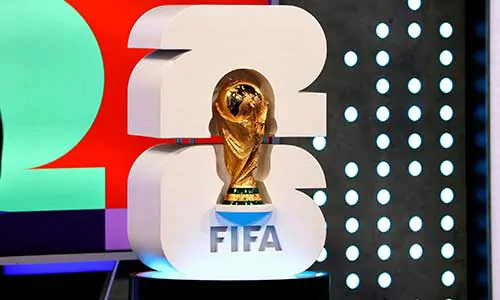
The countdown has ended, and the excitement is palpable as the biggest football tournament on Earth is officially here. The FIFA World Cup 2026 is set to be a historic event, breaking multiple records and capturing the hearts of billions of fans worldwide. Co-hosted by Canada, Mexico, and the United States, this tournament promises unparalleled drama, incredible venues, and a newly expanded format that is changing the face of international football. Whether you are planning to attend in person or watch from home, keeping track of the massive schedule is essential.
This edition marks a significant evolution in international sports. For the first time, the tournament expands from the traditional 32-team setup to a massive 48-team lineup. Consequently, fans will be treated to a total of 104 matches, creating an incredibly rich schedule of matches across North America. To help you navigate this massive festival of football, we have put together a comprehensive guide detailing match dates, finalized groups, venues, and kick-off times.
Table of Contents
- 1. Overview of the FIFA World Cup 2026
- 2. Tournament Dates and Key Match Milestones
- 3. A Closer Look at the 12 Groups of the FIFA World Cup 2026
- 4. Host Cities and Stadiums for the FIFA World Cup 2026
- 5. The FIFA World Cup 2026 Knockout Stage Format
- 6. Kick-Off Times and Viewing Guide
- 7. Conclusion
- 8. Frequently Asked Questions About the FIFA World Cup 2026
1. Overview of the FIFA World Cup 2026
The upcoming tournament is historic for several reasons. Primarily, the three co-hosts—Canada, Mexico, and the United States—will provide a diverse cultural backdrop for the matches. Importantly, Mexico becomes the first country in history to host or co-host the tournament three times, having previously hosted the legendary 1970 and 1986 editions. Meanwhile, the United States welcomes the tournament back for the first time since 1994, and Canada hosts the men’s tournament for the very first time, making the FIFA World Cup 2026 the largest tournament in football history.
The decision to expand the tournament to 48 nations ensures representation from every corner of the globe. As a result, 12 groups of four teams each have been established. This ensures that every qualified team is guaranteed at least three group-stage matches. Furthermore, the expansion allows several nations to make their debut on the global stage, creating an exciting undercurrent of unpredictability and fresh rivalries.
The qualified teams for the FIFA World Cup 2026 will be distributed across diverse ecological and time zones. To minimize travel times for players and fans, FIFA has divided the host cities into three main regional clusters: East, Central, and West. Therefore, teams will largely stay within their designated geographic zones during the group stage, protecting player welfare and reducing environmental impacts.
2. Tournament Dates and Key Match Milestones
The tournament officially kicks off in mid-June and extends over 39 days of highly competitive football. This extended timeline is a direct result of the expanded format. Below is the schedule of the critical phases of the tournament:
| Tournament Phase | Start Date | End Date | Number of Matches |
|---|---|---|---|
| Group Stage | June 11, 2026 | June 27, 2026 | 72 matches |
| Round of 32 | June 28, 2026 | July 3, 2026 | 16 matches |
| Round of 16 | July 4, 2026 | July 7, 2026 | 8 matches |
| Quarter-Finals | July 9, 2026 | July 11, 2026 | 4 matches |
| Semi-Finals | July 14, 2026 | July 15, 2026 | 2 matches |
| Third-Place Play-off | July 18, 2026 | July 18, 2026 | 1 match |
| Final Match | July 19, 2026 | July 19, 2026 | 1 match |
The tournament’s opening fixture is scheduled for June 11, 2026, at the legendary Estadio Azteca in Mexico City, where Mexico will face South Africa in an exciting opening clash. The group stage will run continuously for over two weeks, featuring up to six matches per day during peak periods. Consequently, football enthusiasts will have an unprecedented amount of action to follow daily.
Following the conclusion of the group stage on June 27, the knockout phase begins immediately on June 28 with the newly introduced Round of 32. This phase introduces high-stakes, single-elimination football earlier than in previous tournaments. The competition will rapidly narrow down through the Round of 16 and Quarter-Finals, culminating in the highly anticipated final match on July 19, 2026, at the New York New Jersey Stadium (MetLife Stadium) in East Rutherford.
3. A Closer Look at the 12 Groups of the FIFA World Cup 2026
The final draw has produced 12 highly competitive groups, featuring mouth-watering clashes, historic rivalries, and potential underdog stories. Below is the detailed breakdown of all the groups:
Group A: Mexico, South Africa, South Korea, Czechia
Group A is filled with narrative depth. Mexico, as a host country, starts their journey in Mexico City at the historic Estadio Azteca. They face a familiar foe in South Africa, mirroring the memorable opening match of 2010. Furthermore, South Korea brings its elite tactical speed and high energy, led by legendary players who have established themselves in Europe. Czechia, who navigated a difficult European qualification path, rounds out this group with a physical and defensively organized style of play. This group is widely expected to be highly competitive, with no single team guaranteed a spot in the knockout stage.
Group B: Canada, Bosnia and Herzegovina, Qatar, Switzerland
Canada, co-hosting the event, finds themselves in a highly demanding Group B. Switzerland remains the most formidable opponent in this tier, renowned for their consistent tournament performances and structural discipline. Bosnia and Herzegovina, who secured their spot by overcoming tough European play-offs, present a major threat with their robust physical style and attacking capabilities. Meanwhile, Qatar brings modern continental experience, having dominated Asian football in recent years. Canada must make the most of their home advantage in Toronto and Vancouver to advance.
Group C: Brazil, Morocco, Scotland, Haiti
Group C is undoubtedly one of the most exciting groups in the FIFA World Cup 2026. Brazil, the five-time champions, enter as heavy favorites to top the group, featuring a squad filled with global superstars. However, Morocco, the historic semifinalists of 2022, will provide a massive test. Scotland returns to the global stage with massive fan support and a resilient playing style, eager to prove they can match the world’s elite. Haiti, entering as determined underdogs, will look to cause an upset and capture the imagination of neutral fans.
Group D: USA, Paraguay, Australia, Türkiye
Group D is arguably the toughest among the host nation groups, making it a true test for the United States. The USMNT will play their matches on home soil, but they face a brutal lineup of matches. Paraguay brings classic South American defensive grit and swift counter-attacking capabilities. Australia, always a resilient and physically dominant opponent, brings massive experience in knockout-style qualification. On the other hand, Türkiye represents a major European powerhouse with highly passionate support and elite technical players. Therefore, every single match in this group will be a high-stakes encounter.
Group E: Germany, Curaçao, Ivory Coast, Ecuador
Germany headlines Group E as they seek redemption after disappointing runs in previous editions. They face a highly athletic and tactically flexible Ivory Coast side, representing one of Africa’s strongest contingents. Ecuador, known for their high-altitude stamina and fast transition play, will also present a stern challenge. Interestingly, Curaçao makes their historic debut in the FIFA World Cup 2026, making them a fascinating wildcard team that could disrupt the group standings.
Group F: Netherlands, Japan, Sweden, Tunisia
Group F is a tactical masterpiece waiting to happen. The Netherlands, with their classic football philosophy, will face Japan, who have developed a reputation for giant-killing and technical fluidity. Sweden, renowned for their tactical organization and physical prowess, will fight hard for qualification. Tunisia, bringing immense tournament experience and defensive resilience, ensures that every match in Group F will be closely contested and highly tactical.
Group G: Belgium, Egypt, Iran, New Zealand
Belgium’s transitioning squad faces a diverse set of opponents in Group G. Egypt, powered by elite goal-scoring talent, represents a major attacking threat. Iran, historically one of Asia’s most stable and defensively disciplined sides, will be exceptionally hard to break down. New Zealand, the dominant force in Oceania, rounds out the group, hoping to utilize their physical style to secure crucial points.
Group H: Spain, Cabo Verde, Saudi Arabia, Uruguay
Group H brings together European elegance and South American intensity. Spain, the reigning European champions, will look to dominate possession, but Uruguay’s fierce competitive spirit and youthful midfield make them a formidable opponent. Saudi Arabia, known for their tactical discipline and passionate fans, will try to repeat past opening successes. Debutants Cabo Verde enter the FIFA World Cup 2026 as a proud African representative, aiming to write a fairy tale of their own.
Group I: France, Senegal, Iraq, Norway
Group I features a sensational clash of footballing philosophies. France, a perennial powerhouse, will face Senegal in a highly anticipated rematch of their famous 2002 encounter. Iraq brings incredible passion and West Asian resilience, while Norway, boasting some of the world’s most elite goal-scorers, will look to make their mark on the global stage. This group promises goals, drama, and some of the highest-quality individual matchups.
Group J: Argentina, Algeria, Austria, Jordan
The defending champions Argentina, led by their iconic footballing philosophy, headline Group J. They will face a highly technical and passionate Algerian side. Austria, under meticulous tactical coaching, presents a structured European challenge. Jordan makes their historic tournament debut, carrying the hopes of West Asian football and aiming to prove they belong among the elite.
Group K: Portugal, DR Congo, Uzbekistan, Colombia
Group K offers a highly competitive and aesthetically pleasing mix of styles. Portugal, boasting an incredibly deep squad, is favored, but Colombia’s South American flair and high-tempo play make them a massive threat. Uzbekistan, making their debut, represents the rising power of Central Asian football. DR Congo brings a physically dominant and exciting team ready to challenge the favorites.
Group L: England, Croatia, Ghana, Panama
Finally, Group L rounds out the draw with several historic rivalries. England and Croatia, who have played many high-stakes matches in recent years, face off in a modern classic. Ghana brings their traditional strength, speed, and competitive spirit from West Africa. Panama, a resilient CONCACAF competitor, rounds out the group, looking to secure points against their high-profile opponents.
4. Host Cities and Stadiums for the FIFA World Cup 2026
To accommodate the expanded tournament, 16 state-of-the-art stadiums across North America will host the FIFA World Cup 2026 fixtures. These stadiums represent some of the most technologically advanced and high-capacity sporting arenas in the world.
The United States features the largest number of host venues, with 11 cities selected to host matches. These include iconic NFL stadiums that will be converted to accommodate natural grass pitches suitable for elite association football. Mexico will utilize three distinct stadiums, highlighting their deep-rooted footballing heritage. Canada rounds out the selection with two major venues, ensuring that Canadian fans have local access to high-profile international matches.
- United States: Atlanta (Mercedes-Benz Stadium), Boston (Gillette Stadium), Dallas (AT&T Stadium), Houston (NRG Stadium), Kansas City (Arrowhead Stadium), Los Angeles (SoFi Stadium), Miami (Hard Rock Stadium), New York/New Jersey (MetLife Stadium), Philadelphia (Lincoln Financial Field), San Francisco (Levi’s Stadium), Seattle (Lumen Field).
- Mexico: Guadalajara (Estadio Akron), Mexico City (Estadio Azteca), Monterrey (Estadio BBVA).
- Canada: Toronto (BMO Field), Vancouver (BC Place).
These venues have been heavily upgraded to ensure an optimal experience for traveling fans. From improved public transportation links to advanced pitch cooling systems, the infrastructure backing this tournament is unprecedented. Consequently, players will perform on world-class surfaces under optimal conditions, while fans will enjoy cutting-edge stadium amenities.
5. The FIFA World Cup 2026 Knockout Stage Format
The transition from a 32-team to a 48-team format introduces a brand-new knockout stage. In previous editions, only the top two teams from each of the eight groups advanced directly to the Round of 16. However, with 12 groups in play, the path to glory is now more complex and exciting.
In this newly structured format, the top two teams from each of the 12 groups will automatically qualify for the knockout stage. In addition, the eight best third-place teams will also advance. This ensures that almost every final group-stage match has high stakes, as even teams with a single victory or strong goal difference can hope to progress. This unique mechanism is a defining feature of the FIFA World Cup 2026 tournament structure.
Once the 32 qualifying teams are determined, they will enter a straight, single-elimination bracket. Consequently, a team must win five consecutive knockout matches to lift the trophy, as opposed to the four matches required in previous tournaments. This added round increases the physical demand on players and emphasizes the depth of the squads, making tactical rotation and squad management more crucial than ever before.
6. Kick-Off Times and Viewing Guide
Given the vast geographical spread of the host nations, matches will be played across four different time zones: Eastern Time (ET), Central Time (CT), Mountain Time (MT), and Pacific Time (PT). FIFA has carefully mapped out the kick-off times to balance the needs of local match-going fans with global television audiences.
During the group stage, kick-off times are staggered throughout the day. Standard local kick-off times will typically fall between 12:00 PM and 9:00 PM local time. For fans watching from Europe, Africa, and Asia, this means matches will air from late afternoon through the early morning hours. To stay updated with real-time adjustments and official broadcasting announcements, fans should regularly consult the Official FIFA Website.
Broadcasters worldwide are preparing for unprecedented coverage. In the United States, English-language coverage will be hosted by FOX Sports, while Telemundo will provide comprehensive Spanish-language broadcasts. Meanwhile, international news networks such as Al Jazeera Sports News will provide daily analytical coverage, tactical breakdowns, and behind-the-scenes reporting from all 16 host cities.
7. Conclusion
The tournament is not just another sporting event; it is a monumental celebration of global unity, athletic excellence, and tactical innovation. With 48 teams, 16 iconic host cities, and 104 matches, this tournament is set to write a new chapter in the history of sports. Keeping track of the schedules, group dynamics, and kick-off times will ensure you do not miss a single moment of this historic journey.
Are you ready to support your country on the ultimate stage? Mark your calendars, set your alarms, and prepare for over a month of pure footballing drama. Stay tuned to our platform for continuous updates, match previews, and in-depth tactical analyses as the tournament unfolds!
8. Frequently Asked Questions About the FIFA World Cup 2026
When does the FIFA World Cup 2026 start and end?
The tournament begins with the opening match on June 11, 2026, at the Estadio Azteca in Mexico City. It concludes with the highly anticipated final match on July 19, 2026, at the New York New Jersey Stadium in East Rutherford.
How many teams are participating in the FIFA World Cup 2026?
For the first time in tournament history, 48 teams are participating, expanding from the traditional 32-team format that was used in previous editions since 1998.
Where will the FIFA World Cup 2026 final be played?
The final match will take place on July 19, 2026, at the New York New Jersey Stadium, commonly known as MetLife Stadium, located in East Rutherford, New Jersey.
Which countries are hosting the FIFA World Cup 2026?
The tournament is being jointly hosted by three North American countries: Canada, Mexico, and the United States, across 16 different host cities.
How many matches will be played in the FIFA World Cup 2026?
Due to the expansion to 48 teams, a total of 104 matches will be played over the course of the 39-day tournament, providing fans with more action than ever before.
What is the qualification format for the FIFA World Cup 2026 knockout rounds?
The top two teams from each of the 12 groups will qualify directly for the Round of 32. In addition, the eight best third-place teams across all groups will also secure a spot in the knockout stage.