FIFA World Cup 2026 Predictions: Favorites, Dark Horses and Key Teams
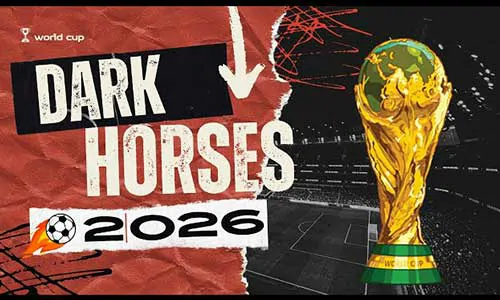
As the global football community turns its attention to North America, the excitement surrounding the FIFA World Cup 2026 is reaching an all-time high. For the first time in history, three nations—the United States, Mexico, and Canada—will co-host the tournament, welcoming an expanded roster of elite international teams. This historic expansion promises more drama, more matches, and an increased chance of unpredictable results. With the opening whistle just days away, analysts, bookmakers, and fans worldwide are busy calculating odds and making predictions.
To help you navigate this massive tournament, we have put together a comprehensive guide. We will analyze the traditional heavyweights, identify the most dangerous underdogs, and break down the tactical setups that could define the summer. Whether you are a casual fan or a dedicated tactical analyst, this guide covers everything you need to know.
Table of Contents
- 1. The Expanded Format of the FIFA World Cup 2026
- 2. The Leading Favorites to Win the FIFA World Cup 2026
- 3. The Ultimate Dark Horses for the FIFA World Cup 2026
- 4. Co-Host Advantage: Key Teams Enjoying Home Support
- 5. Comparative Analysis of the Top Contenders
- 6. Strategic and Tactical Trends at the FIFA World Cup 2026
- 7. Our Final Predictions for the FIFA World Cup 2026 Winner
- 8. Frequently Asked Questions About the FIFA World Cup 2026
The Expanded Format of the FIFA World Cup 2026
The upcoming tournament marks a monumental shift in the structure of international football. The tournament will feature 48 teams, an increase from the 32-team format that has been standard since 1998. Consequently, the total number of matches will jump from 64 to 104, spanning across 16 host cities in three countries.
Under this new layout, teams will be divided into 12 groups of four. The top two teams from each group, along with the eight best third-placed teams, will advance to a newly introduced Round of 32. This means that the eventual champion must play eight matches instead of the traditional seven. This change will heavily test squad depth, physical recovery protocols, and tactical adaptability.
Furthermore, the logistical demands of traveling across multiple time zones—from the high altitudes of Mexico City to the coastal climates of Vancouver and Miami—will introduce a level of unpredictability never seen before in a single tournament. As detailed by the official FIFA tournament portal, managing player fatigue and travel schedules will be just as crucial as on-field strategy.
The Leading Favorites to Win the FIFA World Cup 2026
While the expanded field creates more opportunities for surprises, the ultimate winner of the trophy is highly likely to come from football’s elite tier. Several powerhouse nations have the perfect blend of world-class talent, tactical continuity, and tournament experience to go all the way.
France: The Blue Machine Stays Strong
As France prepares to conquer the world again, their deep squad makes them a prime candidate to dominate the FIFA World Cup 2026. Led by their world-class forward Kylian Mbappé, Les Bleus boast unmatched quality in almost every position.
In addition to Mbappé, France’s midfield has evolved with the rise of Eduardo Camavinga and Aurélien Tchouaméni. Under the long-term guidance of Didier Deschamps, France has developed a highly pragmatic, tournament-winning style that values solid defensive structures and clinical transition play. Their physical power and elite depth make them incredibly difficult to beat in knockout football.
Argentina: Can Messi Keep the Dream Alive?
The defending champions head into the FIFA World Cup 2026 hoping to replicate their historic success in Qatar. Under Lionel Scaloni, Argentina has maintained a cohesive, hard-working system centered around a mixture of veteran leadership and vibrant young talent.
While much of the spotlight remains on Lionel Messi’s leadership, players like Alexis Mac Allister, Enzo Fernández, and Julian Álvarez are now the engine room of this team. Argentina’s greatest strength lies in their collective unity and tactical flexibility, making them a very difficult opponent for any European or South American challenger.
Spain: Tactical Masterclass on the Global Stage
Spain’s technical brilliance will once again be tested on the global stage at the FIFA World Cup 2026. Following their impressive performances in continental competitions, La Roja has successfully transitioned away from slow possession play to a much more direct, explosive style.
With dynamic wingers like Lamine Yamal and Nico Williams stretching defenses, Spain possesses a highly dangerous attacking threat. Anchored by Rodri in the defensive midfield, their ability to control the tempo of matches remains unmatched. If their central defenders can hold firm against physical strikers, Spain is highly capable of lifting the trophy.
England: Will It Finally Come Home?
With a generation of world-class talents entering their prime, the pressure is on the Three Lions to deliver at the FIFA World Cup 2026. England possesses one of the most valuable squads in the world, featuring superstars like Jude Bellingham, Bukayo Saka, and Phil Foden supporting their clinical striker Harry Kane.
On paper, England’s attacking midfield options are arguably the best in the tournament. However, their primary challenge has always been defensive consistency under high pressure and tactical flexibility during late knockout stages. If they can solve their defensive puzzles, England will be a major force to reckon with.
Portugal: A New Era of Portuguese Depth
With remarkable squad depth across all positions, Portugal stands out as one of the most complete teams in the FIFA World Cup 2026. They are no longer a side reliant on a single superstar; instead, they boast elite talent across their entire starting lineup.
With creative forces like Bruno Fernandes, Bernardo Silva, and Vitinha controlling the midfield, and the explosive pace of Rafael Leão on the wing, Portugal can dismantle any defense. Supported by a robust backline led by Rúben Dias, they have all the ingredients necessary to win their first-ever World Cup.
Brazil and Germany: Traditional Giants Seeking Redemption
For traditional giants Germany and Brazil, the FIFA World Cup 2026 represents a vital opportunity for redemption. Germany, under Julian Nagelsmann, has rediscovered its identity with exciting youngsters like Florian Wirtz and Jamal Musiala leading a high-pressing offensive unit.
Brazil, on the other hand, relies heavily on the individual brilliance of Vinicius Júnior and Rodrygo. While the Seleção has faced qualifying inconsistencies, their historical pedigree and individual talent mean they can never be ruled out when the tournament begins.
The Ultimate Dark Horses for the FIFA World Cup 2026
Every World Cup produces an underdog story that captures the hearts of fans worldwide, much like Morocco’s historic run to the semi-finals in 2022. The expanded 48-team layout creates an even better environment for tactical, disciplined teams to surprise the favorites.
Norway: Erling Haaland’s Grand Stage Debut
Norway qualified for the FIFA World Cup 2026 with a formidable record, ready to make their mark after a long tournament absence. They are considered by many experts to be one of the most dangerous unseeded teams in the competition.
In Erling Haaland, Norway possesses arguably the most clinical striker on the planet. Supported by the creative vision of Martin Ødegaard and the explosive winger Oscar Bobb, Norway has the offensive firepower to hurt any elite defense. If their defensive unit can hold strong under pressure, they could easily reach the late knockout rounds.
Morocco: Building on the Historic 2022 Run
Morocco enters the FIFA World Cup 2026 as Africa’s highest-ranked nation, determined to prove their historic 2022 semi-final run was no fluke. They have built a highly structured squad that balances defensive resilience with elite technical quality.
With world-class stars like Achraf Hakimi, Sofyan Amrabat, and the creative Brahim Díaz, the Atlas Lions have the experience and tactical organization to frustrate top-tier opponents. Their incredible team chemistry and passionate fan support make them a very difficult team to face in a knockout format.
Ecuador: South America’s Defensive Powerhouse
Ecuador’s robust tactical setup will make them an incredibly difficult opponent for anyone at the FIFA World Cup 2026. During the rigorous CONMEBOL qualifiers, Ecuador boasted one of the best defensive records on the continent, conceding very few goals.
Led by the central defensive pairing of Piero Hincapié and Willian Pacho, alongside the tireless Moisés Caicedo in midfield, Ecuador is built to neutralize high-flying attacks. Their physical presence and quick transition play make them a classic dark horse candidate.
Japan: The Tactically Disciplined Giant-Killers
Japan has consistently shown that they can defeat elite European and South American giants through disciplined pressing and rapid counter-attacks. Under a highly organized coaching setup, Japan’s tactical flexibility allows them to adapt to different opponents during a match. With technical players like Takefusa Kubo and Wataru Endo, they are fully capable of orchestrating major upsets in the knockout rounds.
Co-Host Advantage: Key Teams Enjoying Home Support
For the host nations, playing on home soil during the FIFA World Cup 2026 provides an unparalleled boost. Historically, host nations often perform far above their standard paper rankings due to familiar conditions, passionate home crowds, and minimal travel strain during the group stages.
- United States (USMNT): Boasting a highly talented young generation featuring Christian Pulisic, Weston McKennie, and Folarin Balogun, the U.S. will look to leverage massive home crowds to secure a deep run.
- Mexico: Playing at the iconic Estadio Azteca, Mexico possesses a historic home advantage. The intense climate and incredible fan support make them formidable hosts.
- Canada: Led by the world-class pace of Alphonso Davies and clinical forward Jonathan David, Canada aims to use their home turf to transition from tournament newcomers to knockout-stage contenders.
Comparative Analysis of the Top Contenders
To help visualize the layout of the tournament, the table below provides a comparative analysis of the primary favorites and the most dangerous dark horses based on statistical trends and squad strengths.
| Team | Status | Key Player | Primary Tactical Strength |
|---|---|---|---|
| France | Favorite | Kylian Mbappé | Unmatched squad depth & rapid transitions |
| Spain | Favorite | Rodri | Midfield control & dynamic wing play |
| Argentina | Favorite | Lionel Messi | Tactical flexibility & winning mentality |
| Portugal | Favorite | Bruno Fernandes | Creative midfield & exceptional bench depth |
| Norway | Dark Horse | Erling Haaland | Clinical finishing & world-class playmaking |
| Morocco | Dark Horse | Achraf Hakimi | Elite defensive block & team chemistry |
| Ecuador | Dark Horse | Moisés Caicedo | Physical intensity & defensive organization |
Strategic and Tactical Trends at the FIFA World Cup 2026
The sheer scale of this tournament means that tactical trends will likely differ from previous editions. According to analytical reports by Opta Analyst’s Football Predictions, physical preparation and recovery strategies will play an incredibly prominent role.
Firstly, the introduction of the Round of 32 means that coaches must rotate their starting lineups more frequently. Relying heavily on the same 11 players throughout the group stage could result in muscle fatigue and injuries during the crucial knockout rounds. Consequently, nations with deep benches—such as France, Portugal, and England—will hold a distinct advantage.
Secondly, the weather conditions in North America during June and July will be highly demanding. High humidity in southern US venues and extreme heat in Mexican host cities will force teams to adopt more pragmatic tactical approaches. We are likely to see teams alternate between intensive high-pressing sequences and compact mid-blocks to conserve physical energy.
Our Final Predictions for the FIFA World Cup 2026 Winner
Predicting the winner of an expanded, 48-team tournament is incredibly challenging. Traditional supercomputers and mathematical models highlight France and Spain as the safest choices due to their squad value and recent international pedigree.
However, football is rarely dictated entirely by mathematical models. Spain’s fluid, rapid transition style makes them an incredibly balanced team. If they can maintain their defensive stability, their tactical system is perfectly suited to navigate the grueling eight-match path to glory.
For those looking at potential surprises, keep a close eye on Norway and Ecuador. Norway’s world-class attacking power can win individual games, while Ecuador’s incredibly solid defensive structure makes them the ultimate tournament spoiler. Ultimately, the winner will be the team that best manages the unique physical, mental, and logistical challenges of this historic North American summer.
Frequently Asked Questions About the FIFA World Cup 2026
Q1: When does the FIFA World Cup 2026 start and end?
A1: The tournament is scheduled to start on June 11, 2026, with the opening match at the historic Estadio Azteca in Mexico City, and will conclude with the final on July 19, 2026, at MetLife Stadium in New Jersey.
Q2: How many teams are participating in this edition?
A2: A total of 48 teams will participate in the tournament, representing a significant expansion from the previous 32-team format.
Q3: Who are the top favorites to win the FIFA World Cup 2026?
A3: The primary favorites according to experts and bookmakers are Spain, France, Argentina, England, and Portugal due to their exceptional squad depth and international experience.
Q4: Who are considered the best dark horse candidates?
A4: Norway (led by Erling Haaland), Morocco, Ecuador, and Japan are highly regarded as the most dangerous dark horses capable of upsetting elite teams.
Q5: How does the new tournament format work?
A5: The 48 teams are split into 12 groups of four. The top two from each group and the eight best third-placed teams advance to a new Round of 32 knockout stage.
What are your predictions for this historic summer? Will a traditional giant dominate the tournament, or will a dark horse rise to claim ultimate glory? Let us know your thoughts in the comments section below, and share this tactical guide with your fellow football fans!