FIFA World Cup 2026 Location and Viewing Guide
The anticipation is reaching a fever pitch as football fans around the globe prepare for the most massive sporting event in history. The FIFA World Cup 2026 is set to redefine the boundaries of international soccer, bringing together an unprecedented number of nations, athletes, and fans. This tournament is not just another edition of the classic cup; it is a historic expansion that will span an entire continent, stretching across Canada, Mexico, and the United States.
Whether you are planning to travel to the games in person or looking for the best ways to catch all the action from the comfort of your living room, having a reliable roadmap is essential. Consequently, this comprehensive guide offers a deep dive into the tournament’s unique format, the 16 iconic host cities, and a complete viewing strategy to ensure you do not miss a single goal. Read on to discover everything you need to know about the upcoming global showpiece.
Table of Contents
- The Expansion and New Format of the FIFA World Cup 2026
- FIFA World Cup 2026 Host Countries and Stadiums
- Complete Stadium Capacity and Location Comparison
- Complete FIFA World Cup 2026 Schedule and Dates
- Comprehensive FIFA World Cup 2026 Viewing Guide
- Essential Tips for World Cup Travelers
- Frequently Asked Questions (FAQ)
The Expansion and New Format of the FIFA World Cup 2026
This historic edition of the FIFA World Cup 2026 marks a significant departure from previous tournaments. For the first time in the history of the competition, the event will feature 48 competing national teams, expanding from the traditional 32-team setup used since 1998. Consequently, this change opens up more opportunities for nations across all six continental confederations to experience the thrill of the world stage.
Because of this expansion, the tournament structure has undergone a major overhaul. Teams will be divided into 12 groups of four. Under this new system, the top two teams from each group, along with the eight best third-place finishers, will advance to a newly introduced Round of 32. This adds an extra knockout round, making the path to the trophy more challenging than ever before.
Furthermore, the total number of matches will skyrocket from 64 to 104. Despite the increased volume of games, the tournament’s overall footprint is optimized to minimize travel fatigue for the squads. However, for viewers, this means 39 days of non-stop football action, creating a summer festival of sport that will capture the world’s attention from June 11 to July 19, 2026.
FIFA World Cup 2026 Host Countries and Stadiums
The joint bid from Canada, Mexico, and the United States, known during the bidding process as “United 2026,” will distribute the matches across three massive nations. This makes it the first World Cup hosted by three separate countries. To manage the logistical challenges, the tournament organizers have split the venues into three geographical regions: West, Central, and East. This strategic alignment helps minimize travel distances for both teams and supporters within the group stages.
United States Host Cities
The United States will host the majority of the matches during the FIFA World Cup 2026, with 11 of the 16 host cities located across the nation. The American stadiums are renowned for their massive capacities, state-of-the-art technology, and world-class luxury amenities.
- New York/New Jersey (MetLife Stadium): Situated in East Rutherford, New Jersey, this iconic venue will have the distinct honor of hosting the grand final on July 19, 2026.
- Dallas (AT&T Stadium): Located in Arlington, Texas, this stadium features a retractable roof and one of the largest video screens in the world, hosting nine matches, including a semifinal. It also houses the International Broadcast Center (IBC).
- Atlanta (Mercedes-Benz Stadium): A architectural marvel with a retractable roof, this multi-purpose arena is scheduled to host several key fixtures, including the other semifinal.
- Los Angeles (SoFi Stadium): This cutting-edge, multi-billion-dollar stadium in Inglewood will host the opening match for the United States Men’s National Team (USMNT).
- Other US Cities: Boston (Gillette Stadium), Houston (NRG Stadium), Kansas City (Arrowhead Stadium), Miami (Hard Rock Stadium), Philadelphia (Lincoln Financial Field), San Francisco Bay Area (Levi’s Stadium), and Seattle (Lumen Field).
Mexico Host Cities
Mexico brings a legendary football heritage to the tournament. With this edition, Mexico becomes the first nation in history to host or co-host the men’s tournament three times, having previously done so in 1970 and 1986.
- Mexico City (Estadio Azteca): As one of the most hallowed grounds in football history, this stadium will host the opening match of the tournament on June 11, 2026. It has previously witnessed legendary World Cup moments from Pelé and Diego Maradona.
- Guadalajara (Estadio Akron): Known for its distinctive volcano-like exterior design, this modern arena will showcase several group-stage matches.
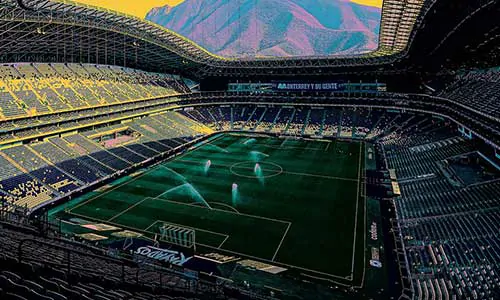
- Monterrey (Estadio BBVA): Set against the stunning backdrop of the Cerro de la Silla mountain, this picturesque stadium offers spectators one of the most beautiful views in global football.
Canada Host Cities
While Canada has successfully hosted several FIFA youth and women’s tournaments, this marks the country’s very first time hosting the men’s flagship event. Two dynamic cities will represent the Great White North.
- Vancouver (BC Place): Located on the scenic west coast, this stadium features a retractable roof and a vibrant atmosphere, hosting several group-stage games.
- Toronto (BMO Field): Positioned near the shores of Lake Ontario, this intimate stadium is undergoing significant expansion to meet FIFA’s capacity requirements, preparing to welcome fans from all corners of the globe.
Complete Stadium Capacity and Location Comparison
To help you visualize where the games will take place during the FIFA World Cup 2026, the table below outlines the stadiums, their locations, and their expected tournament capacities:
| Stadium Name (Tournament Designation) | City & Region | Country | Approx. Capacity |
|---|---|---|---|
| Dallas Stadium (AT&T Stadium) | Arlington, TX (Central) | United States | 94,000 |
| Mexico City Stadium (Estadio Azteca) | Mexico City (Central) | Mexico | 87,500 |
| New York New Jersey Stadium (MetLife Stadium) | East Rutherford, NJ (East) | United States | 82,500 |
| Atlanta Stadium (Mercedes-Benz Stadium) | Atlanta, GA (East) | United States | 75,000 |
| Kansas City Stadium (Arrowhead Stadium) | Kansas City, MO (Central) | United States | 73,000 |
| Houston Stadium (NRG Stadium) | Houston, TX (Central) | United States | 72,000 |
| Los Angeles Stadium (SoFi Stadium) | Inglewood, CA (West) | United States | 70,000 |
| Philadelphia Stadium (Lincoln Financial Field) | Philadelphia, PA (East) | United States | 69,000 |
| Seattle Stadium (Lumen Field) | Seattle, WA (West) | United States | 69,000 |
| San Francisco Bay Area Stadium (Levi’s Stadium) | Santa Clara, CA (West) | United States | 68,500 |
| Boston Stadium (Gillette Stadium) | Foxborough, MA (East) | United States | 65,000 |
| Miami Stadium (Hard Rock Stadium) | Miami Gardens, FL (East) | United States | 64,000 |
| Vancouver Stadium (BC Place) | Vancouver, BC (West) | Canada | 54,000 |
| Monterrey Stadium (Estadio BBVA) | Guadalupe, NL (Central) | Mexico | 53,500 |
| Guadalajara Stadium (Estadio Akron) | Zapopan, JAL (Central) | Mexico | 48,000 |
| Toronto Stadium (BMO Field) | Toronto, ON (East) | Canada | 45,000 |
Complete FIFA World Cup 2026 Schedule and Dates
Understanding the flow and timeline of the FIFA World Cup 2026 is critical for fans trying to schedule their viewings. Because of the expanded format, the entire competition spans 39 days, allowing for a structured progression through the tournament stages.
The journey kicks off on June 11, 2026, at the legendary Estadio Azteca in Mexico City, where Mexico will play the opening match. Simultaneously, the group-stage schedules are designed to group team travel regionally to avoid grueling coast-to-coast flights during the initial phase. Below is a breakdown of the key stages and their corresponding dates:
- Group Stage (June 11 – June 27, 2026): Over these 17 days, the 48 teams will compete in 12 groups, battling to secure a place in the next round. Each team plays three group games, resulting in a flurry of action across all 16 host cities.
- Round of 32 (June 28 – July 3, 2026): The newly introduced knockout stage, featuring 32 qualified teams, begins immediately. This round turns the pressure up, where one bad day means packing bags and heading home.
- Round of 16 (July 4 – July 7, 2026): Coinciding with the United States’ Independence Day celebrations, the Round of 16 will feature the surviving giants battling for a quarterfinal berth.
- Quarterfinals (July 8 – July 11, 2026): The final eight teams will compete in some of the most highly anticipated matches of the tournament. These high-stakes games will occur in Boston, Los Angeles, Miami, and Kansas City.
- Semifinals (July 14 – July 15, 2026): The remaining four teams will fight for a ticket to the final. These matches are scheduled to take place in Dallas and Atlanta, utilizing their massive capacities to deliver breathtaking atmospheres.
- Third-Place Playoff (July 18, 2026): Before the ultimate champion is crowned, the semi-final runners-up will meet in Miami to compete for the bronze medal.
- The Grand Final (July 19, 2026): MetLife Stadium in East Rutherford, New Jersey, will play host to the highly anticipated final match of the FIFA World Cup 2026. This historic final will also feature a first-ever Super Bowl-style halftime show with Coldplay.
Comprehensive FIFA World Cup 2026 Viewing Guide
Whether you are a cord-cutter, a cable subscriber, or a casual fan who wants to catch select matches, navigating the broadcast landscapes can be confusing. However, this definitive FIFA World Cup 2026 viewing guide outlines how to watch all 104 matches live across different major regions, including streaming alternatives and free-to-air options.
How to Watch in the United States
For viewers in the United States, English-language broadcast rights are held exclusively by FOX Sports, while Spanish-language rights belong to NBCUniversal (Telemundo and Universo).
- FOX and FS1 (English): FOX will broadcast a record 70 matches on network television, including 40 in primetime. The remaining 34 games will air on the cable channel FS1. Fans can access these channels through traditional cable or live TV streaming platforms like Fubo, Hulu + Live TV, YouTube TV, and DirecTV Stream.
- FOX One (English Streaming): FOX has introduced a direct-to-consumer streaming option called FOX One. Fans can stream all 104 matches live on this service for a monthly subscription fee, which is highly convenient for those without a television package.
- Telemundo, Universo, and Peacock (Spanish): Telemundo and Universo will broadcast matches in Spanish, and Peacock will stream all 104 matches live in Spanish. Premium plans on Peacock offer an affordable way to watch the tournament on multiple devices.
How to Watch in Canada
Bell Media holds the exclusive broadcasting rights in Canada. Consequently, Canadian fans have direct access to every match through several traditional and digital avenues.
- TSN and CTV: TSN (The Sports Network) and CTV will split the broadcast of all matches. Major games, including Canada’s group-stage fixtures and the knockout rounds, will air on free-to-air CTV.
- TSN+ and Crave: If you prefer digital streaming, you can subscribe directly to TSN+ or use the Crave streaming platform to watch matches live on your mobile devices, smart TVs, or computers.
How to Watch in the United Kingdom
The United Kingdom maintains a strict “Category A” sporting law. This mandate ensures that major national events, such as the World Cup, remain accessible to the public without paywalls. Therefore, coverage is completely free.
- BBC and ITV: The BBC and ITV will share the broadcasting rights for the entire tournament. They will broadcast the games across their primary channels, BBC One and ITV1.
- BBC iPlayer and ITVX: Fans can stream matches live or watch them on-demand for free on BBC iPlayer and ITVX using compatible devices.
How to Watch in Australia
In Australia, SBS (Special Broadcasting Service) continues its long-running relationship with international soccer, acting as the primary broadcaster for the tournament.
- SBS and SBS On Demand: SBS will broadcast matches live and free-to-air on television. Additionally, the SBS On Demand platform will offer comprehensive live streaming, match highlights, and analysis at no cost.
Innovative Streaming & Social Media Integrations
The FIFA World Cup 2026 is embracing modern media consumption habits through strategic agreements with major tech platforms. For instance, FIFA has designated TikTok as a preferred platform, allowing broadcasters to stream parts of games and unique behind-the-scenes content in a dedicated hub. Furthermore, YouTube has a partnership allowing approved channels to stream the first 10 minutes of games for free, alongside full match broadcasts in specific territories like Brazil via CazéTV. These integrations provide more ways than ever to interact with the tournament.
Essential Tips for World Cup Travelers
If you are planning to attend the FIFA World Cup 2026 in person, navigating three vast countries requires meticulous planning. Unlike previous editions concentrated in compact geographic areas (such as Qatar in 2022), the North American footprint is massive. Consequently, here are some essential tips to keep in mind:
- Secure Visas Early: Remember that you may need separate travel authorizations or visas depending on your route. The United States requires an ESTA or visa for many travelers, Canada requires an eTA, and Mexico has its own entry requirements. Ensure your passport is valid for at least six months beyond your planned stay.
- Plan Your Intercity Travel: Traveling between cities like Vancouver and Mexico City covers thousands of miles. High-speed rail is non-existent between these host nations, so you will rely heavily on domestic flights. Booking flights months in advance is highly recommended to avoid price spikes.
- Look Into Public Transit: Within the cities, public transit will be your best friend. Major hubs like New York, Chicago, San Francisco, and Toronto have robust subway and light-rail networks. Using public transit is often faster and much cheaper than renting a car or using ride-share apps near crowded stadium zones.
- Book Accommodations in Advance: Hotel and vacation rental prices will rise significantly. Consider staying in neighboring suburbs or smaller towns along commuter rail lines to find more affordable options.
In summary, the FIFA World Cup 2026 promises to be a spectacular festival of football. Whether you plan to watch the action from the stands or from your couch, keeping up with schedule shifts, broadcast announcements, and ticketing phases will ensure you have a highly rewarding experience.
Are you supporting a specific team, or planning to travel to one of the 16 host cities? Let us know in the comments below, and don’t forget to share this guide with your fellow soccer fans!
Frequently Asked Questions (FAQ)
1. Where will the FIFA World Cup 2026 be held?
The FIFA World Cup 2026 will be jointly hosted by 16 cities across three North American nations: the United States, Mexico, and Canada. The United States has 11 host cities, Mexico has 3, and Canada has 2.
2. How many teams are playing in the FIFA World Cup 2026?
The tournament will feature an expanded roster of 48 national teams, which is an increase from the 32 teams that competed in past tournaments. This expansion results in a total of 104 matches.
3. When does the FIFA World Cup 2026 start and end?
The FIFA World Cup 2026 will kick off with the opening match on June 11, 2026, and will conclude with the final match on July 19, 2026.
4. Where can I watch the FIFA World Cup 2026 online?
In the United States, you can stream the matches in English on FOX One and through live TV streaming services (like YouTube TV or Fubo). Spanish coverage can be streamed on Peacock. In Canada, TSN+ and Crave are the primary options, while SBS On Demand (Australia) and BBC iPlayer/ITVX (UK) offer free streams.
5. Which stadium will host the FIFA World Cup 2026 final?
The final match of the FIFA World Cup 2026 will be played on July 19, 2026, at MetLife Stadium (officially designated as New York New Jersey Stadium during the tournament) in East Rutherford, New Jersey.
6. Can I stream the games for free?
Yes, viewers in the UK can watch all games for free on BBC iPlayer and ITVX. Australian viewers can stream for free via SBS On Demand, and Brazilian viewers can stream via CazéTV on YouTube. In other regions, FIFA+ may offer select replays and content.