Box-to-Box Midfielder Explained: Duties, Skills and Tactical Importance
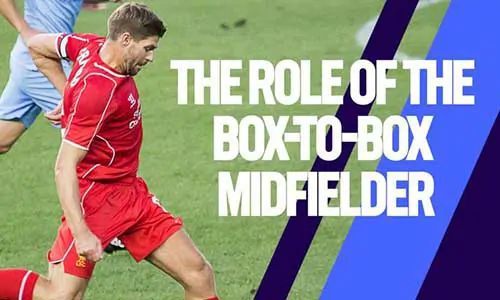
The modern game of football relies heavily on versatile players, but perhaps no role is as physically and tactically demanding as the box-to-box midfielder. Historically referred to as the ultimate all-rounder, a box-to-box midfielder is tasked with influencing play at both ends of the pitch. From breaking up opposition attacks near their own penalty area to finishing off team moves in the opponent’s box, these players are the engines of their teams. Consequently, understanding this position is crucial for any football enthusiast, analyst, or aspiring player who wants to grasp modern tactical setups.
In this comprehensive guide, we will break down the exact duties of this demanding role, the essential skills required to excel, and why managers value them so highly in contemporary tactical systems. Furthermore, we will look at some of the most iconic historical and modern examples of players who have mastered this unique position.
Table of Contents
- What is a Box-to-Box Midfielder?
- Key Duties and Responsibilities
- Essential Skills and Physical Attributes
- Tactical Importance in Modern Formations
- Iconic Box-to-Box Midfielders: Past and Present
- How to Train as a Box-to-Box Midfielder
- Frequently Asked Questions (FAQs)
What is a Box-to-Box Midfielder?
In tactical terminology, a box-to-box midfielder (often designated as a “number 8”) is a central midfielder who possesses the physical capability, tactical intelligence, and technical skill to transition rapidly between defensive duties and attacking play. Unlike defensive anchors (the “number 6”) who shield the defense, or advanced playmakers (the “number 10”) who operate exclusively in the final third, the box-to-box player roams the entire length of the pitch.
The term itself originates from the player’s primary trajectory during a match: running from their own defensive penalty box all the way to the opponent’s attacking penalty box. Because they are expected to contribute to every phase of play, they must be highly adaptable. Therefore, they must act as a destroyer, a progressor, and a goalscorer all within the span of a single ninety-minute match.
Historically, this position was the backbone of classic 4-4-2 formations. However, as modern football transitioned into more complex, possession-oriented systems, the role evolved. Today, the modern box-to-box midfielder is not just a hard runner; they are highly technical space-interpreters who dictate transitions and maintain tactical balance.
Key Duties and Responsibilities
To fully appreciate the tactical value of a box-to-box midfielder, we must divide their responsibilities into three distinct phases of play: the defensive phase, the transition phase, and the attacking phase.
1. Defensive Phase: Shielding and Pressing
When the team is out of possession, the box-to-box midfielder acts as an additional defensive screen. They do not merely stand in place; instead, they aggressively press opponents, close down passing lanes, and support the defensive midfielder. Their primary defensive duties include:
- Tracking back quickly to stop counter-attacks.
- Winning second balls in the middle third of the pitch.
- Executing clean tackles and interceptions to regain possession.
- Providing cover when full-backs push high up the pitch.
2. Transition Phase: Driving the Ball Forward
The transition phase is where this player truly shines. Once possession is regained, they are responsible for moving the ball out of danger and into dangerous attacking areas. They achieve this through two primary methods: vertical passing or direct ball carrying. By driving forward with the ball at their feet, they bypass defensive lines and force the opposition’s defensive block to collapse inward.
3. Attacking Phase: Late Runs and Creative Support
In the final third, a box-to-box midfielder adds a crucial layer of unpredictability. Because opposing defenders are usually occupied with the strikers, a late-running midfielder entering the penalty area is incredibly difficult to track. Additionally, they contribute by:
- Providing passing options on the edge of the penalty area.
- Taking long-range shots when space opens up.
- Creating overloads in wide areas to support wingers.
Essential Skills and Physical Attributes
Because the demands of the position are so diverse, playing as a elite box-to-box midfielder requires an exceptional athletic and technical profile. Below is a breakdown of the key attributes necessary to dominate the midfield.
Elite Stamina and Aerobic Capacity
Without outstanding physical fitness, executing this role is simply impossible. These players typically cover between 11 to 13 kilometers per match, often registering the highest distance covered on their team. This requires a mix of aerobic endurance to sustain 90 minutes of running and anaerobic power to perform repeated high-intensity sprints during transitions.
Tactical Intelligence and Spatial Awareness
Knowing when to run forward and when to hold position is an art form. A great midfielder constantly scans the pitch to assess space. If they push forward too early, they leave their defense exposed to counter-attacks. Conversely, if they hesitate, they miss the opportunity to overload the opponent’s box. Therefore, spatial awareness and tactical discipline are highly prioritized by modern managers.
Technical Versatility
A player in this role must possess a highly balanced technical skillset. They must be comfortable receiving the ball under intense pressure, turning away from defenders, and executing a wide range of passes. From short, snappy combinations in tight spaces to long, diagonal switches of play, their passing must be precise and efficient.
Defensive and Offensive Attribute Comparison
To illustrate the balance required, the table below highlights how these players must master contrasting aspects of the game:
| Defensive Requirements | Offensive Requirements |
|---|---|
| Tackling & Interceptions: Ability to break up plays and win duels cleanly. | Late Box Runs: Timing runs perfectly to meet crosses and cutbacks. |
| Positional Recovery: Sprinting back to cover vacated defensive spaces. | Ball Progression: Carrying the ball forward under pressure. |
| Pressing Intensity: Applying immediate pressure to force turnovers. | Shooting from Distance: Punishing low blocks with long-range efforts. |
| Physical Strength: Shielding the ball and winning aerial battles. | Creativity & Passing: Linking play with forwards through key passes. |
Tactical Importance in Modern Formations
In modern football, tactical flexibility is the key to winning trophies. Consequently, the box-to-box midfielder is often the tactical glue that holds a formation together. Let us look at how they function in different popular tactical setups.
The 4-3-3 Formation
In a standard 4-3-3, the midfield trio usually consists of a defensive anchor (number 6) and two advanced central midfielders (number 8s). Often, one of these eights behaves as a creative playmaker, while the other functions as the primary box-to-box midfielder. This player balances the midfield by dropping deep to help build play from the back, while also making vertical runs to support the front three, forming a dynamic attacking shape.
The 4-2-3-1 Formation
In a 4-2-3-1 system, the double pivot in midfield is critical. Typically, coaches pair a strictly defensive ball-winner with a dynamic box-to-box midfielder. This partnership ensures that while one player stays deep to protect the center-backs, the other has the freedom to advance, carry the ball, and link up with the attacking midfielder (number 10) and wingers.
The 3-5-2 Formation
The 3-5-2 system relies heavily on the wing-backs to provide width, which often leaves the central areas vulnerable if not managed correctly. Here, the central midfielders must cover a massive amount of lateral space. The box-to-box engine is vital in this setup, as they must slide wide to support the wing-backs defensively, while also charging through the half-spaces to join the two strikers during attacks.
Iconic Box-to-Box Midfielders: Past and Present
To truly understand how this role is played at the elite level, we can look at the players who defined and redefined the position across different eras of football history.
The Legends (Historical Icons)
- Steven Gerrard: The quintessential English midfielder. Gerrard possessed an extraordinary passing range, ferocious tackling, and a legendary ability to score vital long-range goals when his team needed them most.
- Patrick Vieira: A towering presence in Arsenal’s “Invincibles” era. Vieira combined immense physical power and defensive dominance with surprisingly elegant ball-carrying ability.
- Frank Lampard: Although highly attack-minded, Lampard’s legendary work rate and unparalleled timing of late runs into the box made him one of the most prolific goalscoring midfielders in football history.
- Roy Keane: Often remembered for his aggressive leadership, Keane was a highly technical, high-stamina player who controlled the tempo of Manchester United’s midfield for over a decade.
The Modern Masters
- Jude Bellingham: Representing the evolution of the role, Bellingham combines physical dominance with elite technical skill, making him highly effective in both defensive duels and advanced goalscoring situations.
- Federico Valverde: Known for his incredible lung-busting sprints and tactical versatility, Valverde provides Real Madrid with unmatched energy, transitions, and defensive coverage.
- Declan Rice: Transitioning from a pure defensive anchor to a highly dynamic midfielder, Rice excels at carrying the ball forward, winning high-press duels, and contributing to attacks.
- Leon Goretzka: A physical powerhouse who excels at recovering possession in deep areas and utilizing his aerial strength to threat opponents inside their own penalty box.
How to Train as a Box-to-Box Midfielder
If you are an aspiring player looking to develop into a highly effective midfielder, your training program must address both physical conditioning and technical development. Here are some actionable steps to improve your game:
1. High-Intensity Interval Training (HIIT)
Standard long-distance jogging is not enough. To replicate match conditions, your conditioning must focus on interval training. Try performing 100-meter sprints followed by 30 seconds of active recovery (light jogging) for 15 to 20 minutes. This trains your cardiovascular system to recover quickly from explosive bursts of speed.
2. Master the “Scan”
Before receiving the ball, you must know what is around you. Practice scanning your shoulder every 2 to 3 seconds during drills. This habit allows you to instantly decide whether to turn and carry the ball forward, play a one-touch pass, or shield the ball from an approaching defender.
3. Wall-Passing and First-Touch Drills
Your first touch must be immaculate under pressure. Practice passing against a solid wall, focusing on controlling the ball out of your feet with your first touch so you are immediately ready to pass or run. Work on using both feet to make yourself unpredictable to defenders.
For more deep-dive tactical breakdowns and expert coaching insights, you can explore detailed guides on professional platforms such as The Coaches’ Voice or analyze advanced performance metrics on The Analyst.
Frequently Asked Questions (FAQs)
What is the main difference between a box-to-box midfielder and a deep-lying playmaker?
A deep-lying playmaker (often operating as a number 6) stays in deep areas to orchestrate the game through passing and spatial control, rarely entering the opponent’s box. Conversely, a box-to-box player is much more dynamic, physically covering the entire pitch, carrying the ball forward, and actively joining the attack inside the penalty area.
Which kit number is traditionally associated with this role?
The number 8 is traditionally associated with this role. While the number 6 is reserved for the defensive midfielder and the number 10 is for the creative playmaker, the number 8 represents the perfect hybrid player who sits between them.
How much distance does a box-to-box midfielder cover in a match?
On average, elite professional players in this position cover between 11 to 13 kilometers per 90-minute match. A significant portion of this distance consists of high-intensity sprints during offensive and defensive transitions.
Can a defensive midfielder transition into a box-to-box midfielder?
Yes, many defensive midfielders successfully transition into this role as they develop their technical passing and confidence on the ball. Examples like Declan Rice prove that a player with strong defensive instincts can expand their game to become highly effective box-to-box threats.
What is the most important skill for this position?
While physical stamina is the foundation, tactical decision-making is the most crucial skill. Knowing when to commit forward to join an attack versus when to drop deep to protect the defense dictates whether the team maintains its tactical balance.
Conclusion
Ultimately, the box-to-box midfielder remains one of the most vital, exciting, and demanding positions in modern football. By seamlessly blending defensive grit with attacking flair, these tireless engines keep teams balanced, cohesive, and dangerous. Whether you are looking to master this role on the pitch or simply seeking to analyze tactical systems more deeply, understanding the duties and skills of this position provides a fascinating window into how modern football is played.
Who do you think is the greatest box-to-box midfielder of all time? Let us know your thoughts in the comments below, and don’t forget to share this guide with fellow football fans!