BMO Field World Cup 2026 Upgrades: How Toronto Is Preparing for FIFA
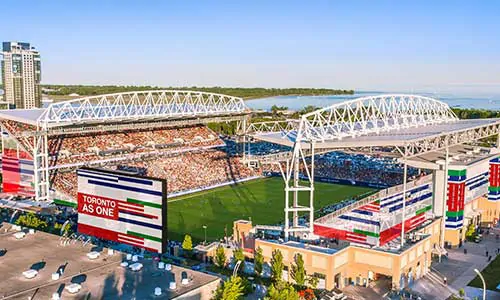
The FIFA World Cup 2026 is set to be the largest and most expansive sports tournament in history. With matches spread across Canada, Mexico, and the United States, host cities are working diligently to meet elite international standards. As one of Canada’s key urban centers, Toronto is gearing up to showcase its premier soccer venue for the tournament.
Consequently, BMO Field is undergoing a dramatic physical and technological transformation to prepare for the spotlight. Locally managed and municipally owned, this landmark venue must adapt to accommodate massive global crowds. Here is a comprehensive look at how Toronto is upgrading this stadium to deliver an exceptional sporting event.
Table of Contents
- The Road to the FIFA World Cup 2026 in Toronto
- Behind the $157.9 Million Transformation
- Key Seating Upgrades: Reaching Tournament Capacity
- Pitch, Broadcast, and Technology Enhancements
- Enhancing the Spectator Experience: Hospitality and Accessibility
- Toronto’s Match Schedule and Transit Logistics
- The Long-Term Legacy of the Upgrades
- Frequently Asked Questions (FAQ)
The Road to the FIFA World Cup 2026 in Toronto
The joint bid that secured the FIFA World Cup 2026 represented a historic milestone for North American sports. While Canada has successfully hosted major FIFA youth and women’s tournaments in the past, hosting the men’s flagship event is unprecedented. Toronto, as Canada’s economic engine and most multicultural city, was a natural choice to serve as an official host venue.
In accordance with tournament guidelines, commercial stadium names are temporarily paused unless the sponsor is an official partner. Therefore, BMO Field will be officially referred to as “Toronto Stadium” for the duration of the tournament. Originally opened in 2007 at Exhibition Place, the venue is home to Toronto FC of Major League Soccer (MLS) and the Toronto Argonauts of the Canadian Football League (CFL).
Over the years, the stadium has undergone multiple expansions to accommodate different sports. However, the requirements for a global football tournament of this magnitude are far more stringent. Consequently, a partnership between the City of Toronto and Maple Leaf Sports & Entertainment (MLSE) was established to carry out massive renovations.
These upgrades ensure that the facility complies with all strict infrastructure and broadcasting guidelines set by FIFA. Ultimately, the modifications aim to place Toronto at the very center of the international soccer conversation.
Behind the $157.9 Million Transformation
Upgrading an established stadium to host the FIFA World Cup 2026 requires a substantial capital commitment. The total approved budget for the Toronto Stadium upgrade project stands at $157.9 million. To make this feasible, the financial burden is shared between public and private partners.
Specifically, the City of Toronto committed $132.9 million to the project, recognizing the long-term tourism and economic benefits. On the other hand, Maple Leaf Sports & Entertainment, which operates the facility, contributed $25 million. This collaborative investment model ensures that both local taxpayers and private enterprises benefit from the stadium’s modernized infrastructure.
Furthermore, the construction was planned in two distinct phases to prevent disrupting scheduled MLS and CFL home games. Phase 1 focused on building the technological and internal framework of the stadium. Phase 2, which concluded in early 2026, targeted the major physical expansions, such as the temporary grandstands and pitch systems.
| Project Element | Details & Specifications | Funding Source / Cost |
|---|---|---|
| Total Renovation Budget | Comprehensive structural, pitch, and technical upgrades | $157.9 Million USD/CAD total |
| City of Toronto Funding | Municipal contribution for public infrastructure legacy | $132.9 Million |
| MLSE Contribution | Private funding from the stadium management company | $25 Million |
| Phase 1 Completion | Videoboards, control rooms, sound system, and broadcast backbone | Completed in late 2025 |
| Phase 2 Completion | Temporary seating installation, hybrid pitch, and player facilities | Completed in March 2026 |
Key Seating Upgrades: Reaching Tournament Capacity
One of the primary challenges for Toronto Stadium was its physical seating capacity. In its standard configuration, the stadium accommodates approximately 28,000 to 30,000 spectators. However, tournament regulations state that any venue hosting group-stage matches must possess a minimum capacity of 45,000 seats.
To overcome this limitation, engineers developed a plan to add 17,756 temporary seats. These temporary grandstands are distributed strategically across the stadium to maintain excellent viewing angles. Specifically, the north grandstand received an additional 10,000 seats, while the south grandstand was expanded by 7,000 seats.
As a result, the total capacity of the stadium has been raised to 45,736 for the summer matches. These temporary structures are designed using modern scaffolding technology, ensuring structural integrity and fan safety. The added seating will remain in place through the duration of the matches and will be carefully dismantled afterward.
Consequently, this temporary approach allows Toronto to host the matches without burdening the city with an oversized stadium post-tournament. It balances the immediate requirements of the FIFA World Cup 2026 with the practical needs of the local sports market for the future.
Pitch, Broadcast, and Technology Enhancements
Modern international football is highly demanding, not just for the athletes but also for the technology supporting the matches. As a result, a significant portion of the renovation budget was directed toward technical and structural upgrades on and off the field.
A World-Class Hybrid Turf System
For the matches played during the FIFA World Cup 2026, a top-tier playing surface is absolutely non-negotiable. While the venue previously utilized hybrid systems, a completely new FIFA-standard stitched hybrid natural grass pitch has been installed. This advanced turf system integrates natural grass with millions of synthetic reinforcing fibers.
Consequently, the playing surface is highly resistant to wear and tear, allowing it to remain pristine despite intense back-to-back match schedules. In addition, the playing field was widened to meet precise tournament dimensions, necessitating changes to the sidelines and team dugouts. The newly installed dugouts provide modern, comfortable seating for players and coaching staff alike.
Advanced Broadcast and AV Infrastructure
Broadcasting the FIFA World Cup 2026 to billions of global viewers requires a massive technological backbone. To meet these demands, Toronto Stadium underwent major upgrades to its broadcast infrastructure. A new, state-of-the-art television broadcast compound has been built on-site to handle international transmission signals.
Furthermore, four massive new LED videoboards have been installed in each corner of the stadium, replacing the older screens. These displays ensure that spectators in every corner of the venue have a clear view of replays and match data. In addition, the stadium-wide audio system and public Wi-Fi infrastructure were completely overhauled, allowing thousands of fans to share their experiences in real time.
Upgraded Player Facilities and Team Areas
To accommodate elite international teams, the player locker rooms and training areas underwent comprehensive renovations. The dressing rooms have been expanded, modernized, and fitted with premium recovery equipment. Furthermore, dedicated medical spaces, media tribunes, and press conference rooms were constructed to support the hundreds of journalists attending each match.
Enhancing the Spectator Experience: Hospitality and Accessibility
Beyond the players on the field, the success of the tournament depends heavily on the overall fan experience. Therefore, the renovation plans included extensive updates to spectator amenities, food services, and venue accessibility. These changes ensure that visitors from all over the world enjoy a comfortable and inclusive environment.
In addition to standard seating, the stadium now features a newly built center-field premium lounge and an expanded state-of-the-art kitchen. These facilities allow the venue to offer high-quality, diverse food options that cater to international tastes. To minimize long lines during halftime, select concession stands have been upgraded with advanced self-serve payment systems.
Moreover, the stadium’s general circulation routes and wayfinding signage have been fully redesigned. Fans can now navigate the concourses and entrance gates more efficiently, reducing congestion. Accessibility was also a core priority during the construction phase.
Consequently, new wheelchair-accessible viewing platforms have been added, alongside improved ramps and specialized elevators. These enhancements guarantee that fans of all physical abilities can enjoy the historic matches with dignity and comfort.
Toronto’s Match Schedule and Transit Logistics
Toronto is scheduled to host a total of six matches during the tournament. These fixtures include five highly anticipated group-stage matches and one knockout match in the Round of 32. Most notably, Toronto Stadium will host Canada’s opening group-stage match on June 12, 2026, marking a historic moment for Canadian soccer.
Because of the stadium’s location at Exhibition Place, managing transit logistics is a priority for city planners. During match days, there will be no public parking available on the stadium grounds. Instead, organizers are promoting a transit-first strategy to move tens of thousands of fans safely and efficiently.
To support this strategy, Toronto is leveraging its existing public transportation networks:
- GO Transit: The Exhibition GO Station is located steps away from the stadium, connecting visitors directly to downtown’s Union Station and the broader Greater Toronto Area.
- TTC Streetcars: The 509 Harbourfront and 511 Bathurst streetcar lines offer frequent direct services from major subway hubs straight to the exhibition grounds.
- Active Transportation: Dedicated pedestrian pathways and bicycle parking areas are being expanded around the perimeter to encourage eco-friendly travel.
In addition, the city will host massive public Fan Festivals (Fan Zones) across downtown. These events will feature giant screens, food trucks, and interactive entertainment, allowing fans without match tickets to participate in the celebrations.
The Long-Term Legacy of the Upgrades
While the immediate focus remains on hosting a successful global tournament, the long-term legacy of these upgrades is highly valuable. Once the final whistle blows, the temporary stands will be dismantled, returning the stadium to its standard capacity of roughly 30,000 seats.
However, the vast majority of the technical and structural renovations are permanent. The new hybrid grass field, modernized locker rooms, upgraded kitchen, and premium hospitality lounges will remain. Consequently, these improvements will directly benefit future sporting events and concerts hosted at the venue.
Furthermore, the upgraded media and broadcasting infrastructure positions Toronto to host other major international events in the future. The home teams, Toronto FC and the Toronto Argonauts, will inherit a world-class facility, enhancing the fan experience for years to come. Ultimately, this ensures that the millions of dollars invested in the stadium will yield a positive return for the community for decades.
Frequently Asked Questions (FAQ)
How many matches will Toronto host during the FIFA World Cup 2026?
Toronto will host a total of six matches during the tournament. This includes five group-stage matches and one Round of 32 knockout fixture. Notably, Canada’s opening match will take place at the stadium on June 12, 2026.
What is the capacity of BMO Field for the World Cup?
By adding 17,756 temporary seats to the north and south grandstands, the total capacity of the stadium will be raised to 45,736 spectators, fully meeting FIFA’s minimum stadium requirements.
Why will BMO Field be called “Toronto Stadium” during the tournament?
According to FIFA’s strict marketing guidelines, stadium names cannot feature corporate sponsors unless they are official partners of the tournament. Therefore, the stadium will be temporarily renamed “Toronto Stadium” for the duration of the event.
How much did the stadium renovations cost and who paid for them?
The total renovation project cost is $157.9 million. The City of Toronto contributed $132.9 million, while the stadium’s operator, Maple Leaf Sports & Entertainment (MLSE), funded the remaining $25 million.
Will the temporary seating stay after the World Cup ends?
No, the 17,756 temporary seats added to the north and south ends will be dismantled and removed post-tournament. This will return the stadium to its standard permanent capacity of about 30,000 seats.
What is the best way to travel to Toronto Stadium on match days?
There is no public parking available at Exhibition Place on match days. Spectators are strongly advised to use public transit, such as GO Transit’s Lakeshore West line to Exhibition GO Station or the TTC’s 509 and 511 streetcar routes.
Conclusion
The extensive transformations at Toronto Stadium demonstrate the city’s commitment to hosting a world-class event. Through careful financial planning, advanced engineering, and robust public-private cooperation, Toronto has successfully navigated a complex upgrade process. From the pristine hybrid turf to the massive temporary stands, the venue is fully prepared to welcome the world.
These upgrades do not just serve a temporary purpose; they represent a significant step forward for the city’s sports infrastructure. Long after the tournament concludes, local athletes and fans will continue to enjoy the benefits of these state-of-the-art facilities.
As the tournament approaches, excitement continues to build across Canada. Whether you are a local supporter or an international visitor, the stage is set for an unforgettable experience. Plan your journey, secure your transit routes, and prepare to witness history in the making at Toronto Stadium!